- Home −
- The Studio
The Studio
The Studio


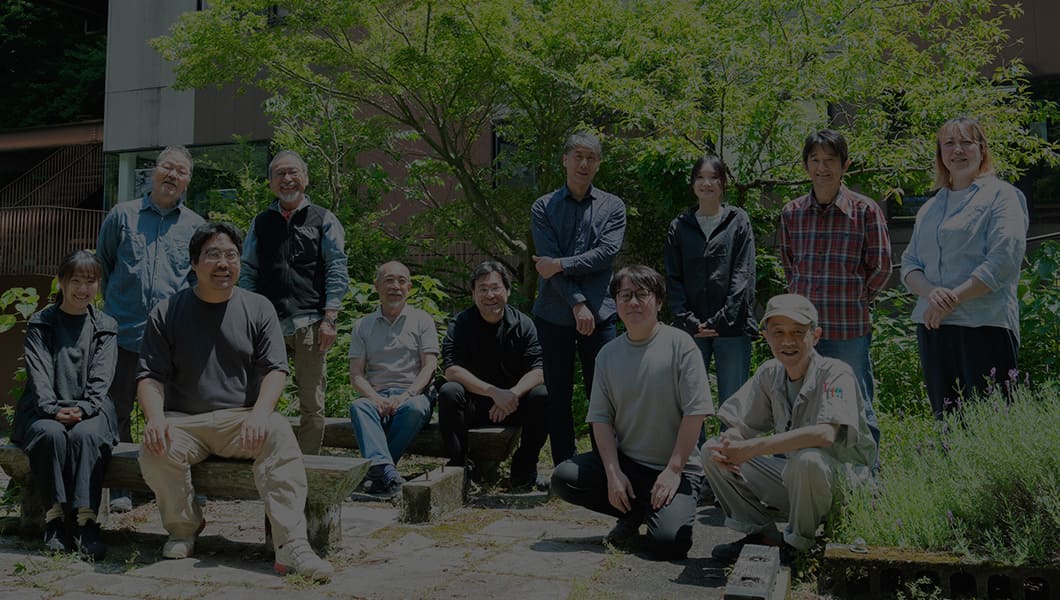
We are CREARE Atami–Yugawara Studio.
Guided by the belief that “places where people gather should become places that enrich the human spirit,” we have collaborated with artists from a wide range of fields for more than half a century. Together, we have created over 560 Public Art projects, bringing color and inspiration to public spaces throughout Japan.
By managing every stage in-house—from planning and production to installation—we have established an approach to art unlike any other in the world. Integrated with architecture, our artworks enhance the character of each space and create meaningful forms of communication that uplift the people who pass through them.
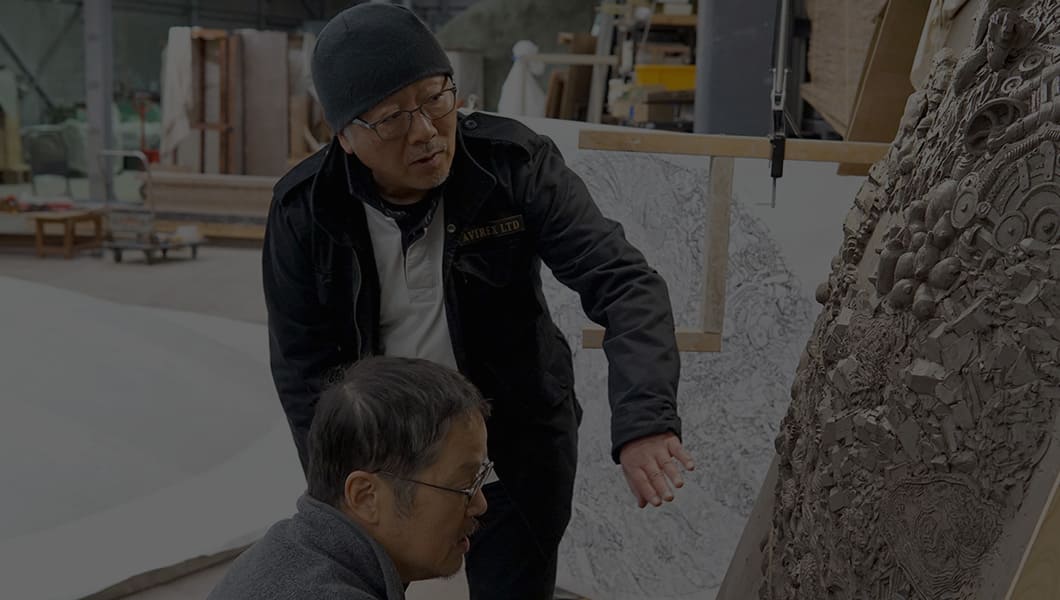
Every day, our artisans engage deeply with each Original Painting, exploring new possibilities of expression and continuing their pursuit of mural artworks unlike anything the world has seen before.
The Origins of the Studio
The Public Art initiative is led by NKB INC., the company that operates the Studio, under its founder and chairman, TAKI Hisao.
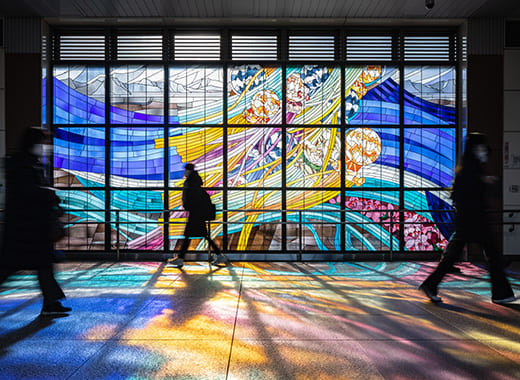
Its first large-scale Stained Glass artwork, “Creation of Heaven and Earth” (Original Painting and Supervisor: FUKUZAWA Ichiro), was installed at Tokyo Station in 1972. As a young man assisting his father, Fuji Taro, with the family’s railway advertising business, TAKI proposed the project to commemorate the 100th anniversary of Tokyo Station in 1972. The project was realized with the support of Japanese National Railways, as it was known at the time. Installing a monumental artwork in a railway station was a bold undertaking in that era.
Following his father’s sudden death in an accident in 1975, TAKI took over the business and continued to advance both its advertising operations and Public Art activities.
Production was initially carried out in rented studios. In 1980, however, the company established CREARE Shigaraki Studio in Shigaraki, Shiga Prefecture—now part of Koka City—for ceramic production. The following year, CREARE Atami–Yugawara Studio was established for the production of Stained Glass.
Ceramic production was later consolidated at the more accessible CREARE Atami–Yugawara Studio, although CREARE Shigaraki Studio continues to be used for certain artworks.
The Teachings of Our First Director
FRANSEN Louis, a Belgian national, came to Japan in the 1960s as a Catholic missionary.
Also a Stained Glass artist, he became fascinated by ceramics and studied techniques at studios throughout Japan. While serving as a priest and teaching at Tokyo University of the Arts, he was approached by TAKI Hisao, now chairman of NKB INC., who invited him to “create art together.”
FRANSEN made the momentous decision to leave the Church and became the first director of the Studio founded by TAKI. For approximately 30 years, until his death in 2010 at the age of 81, he devoted himself not only to production but also to improving the skills of the Studio’s staff.
“Value the character that emerges naturally.”
“Form becomes more interesting when it retains a sense of mystery.”
“Trust the god of fire.”
These words of FRANSEN, imbued with the spirit of Eastern philosophy, continue to shape the attitude and approach of the Studio’s artisans today.
Materials Made to Last a Millennium
The Studio began by producing large-scale Public Art and chose Stained Glass and ceramics as its principal materials.
Stained Glass is exceptionally durable and does not easily deteriorate, as demonstrated by its centuries-long use in European churches. Many examples of church Stained Glass have survived for more than a thousand years.
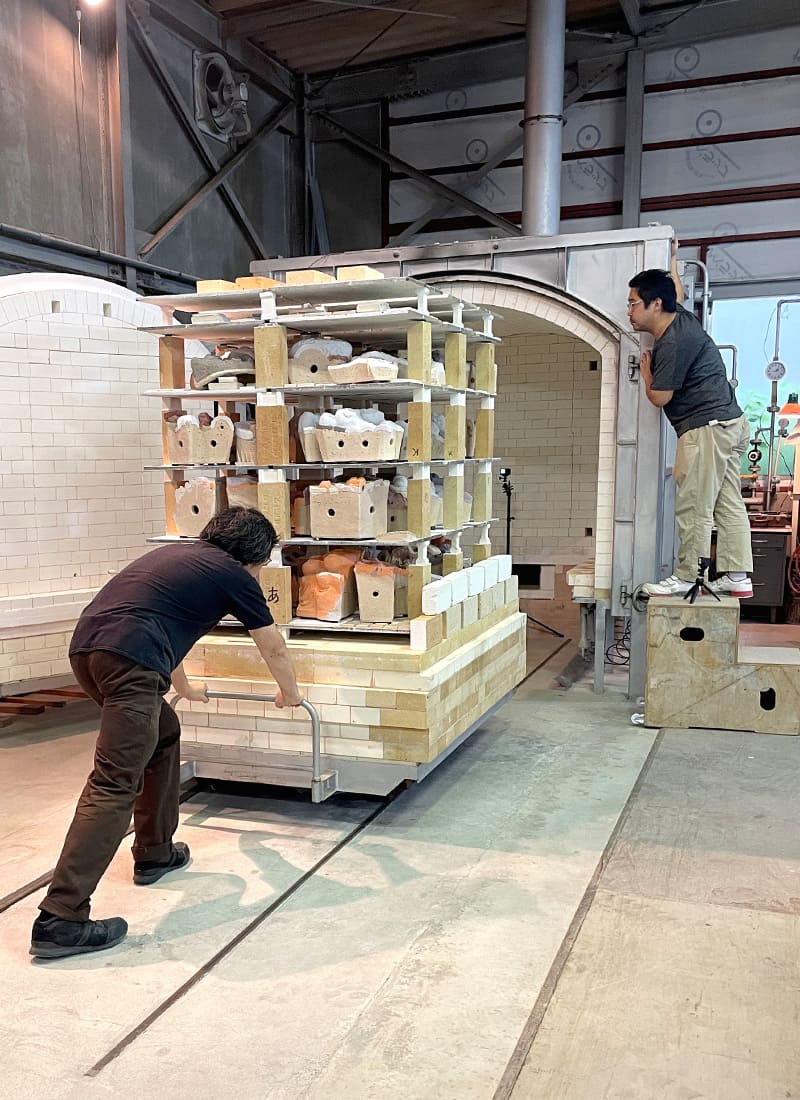
When ceramics are glazed and fired at high temperatures, their surfaces become vitrified, giving them durability comparable to that of Stained Glass.
For more than 50 years, the Studio has produced large-scale Public Art using these two materials. Not a single artwork has cracked, broken, or collapsed, even as a result of earthquakes or other disasters.
We are committed to professional craftsmanship of the highest standard, extending through every stage of installation and mounting.
The Power to “Translate” an Original Painting
Public Art created from an Original Painting is neither a faithful reproduction nor an imitation of the original.
The Studio’s artisans study each Original Painting closely, interpret it, and transform it into a new form of expression. We call this process “Translate.”
The Studio’s ceramic artworks are known as Ceramic Relief because a two-dimensional Original Painting is transformed into a three-dimensional form with raised and recessed surfaces, sometimes projecting more than 30 centimeters.
Although Stained Glass originated in Europe, our artisans use techniques such as firing and grinding to breathe new life into each Original Painting. International visitors to the Studio often express their surprise, saying, “It is remarkable to see Stained Glass transformed into such a distinctly Japanese form of expression.”
The collaboration between the artists who create the Original Paintings and the Studio generates added value in which one plus one becomes three—or even four.
New Initiatives
For many years, the Studio has commissioned renowned artists to create Original Paintings for its large-scale Public Art.
Artworks based on Original Paintings by late artists such as KATAOKA Tamako, HIRAYAMA Ikuo, HORI Fumiko, SANO Nui, NOMIYAMA Gyoji, and IGARASHI Takenobu have now become part of Japan’s cultural heritage.
In recent years, the Studio has also actively commissioned Original Paintings from Manga artists. Manga possesses exceptional power to communicate, and many people from Japan and abroad visit to see artworks based on Original Paintings by artists ranging from masters such as TEZUKA Osamu and YAGUCHI Takao to leading contemporary creators such as OTOMO Katsuhiro, TAKAHASHI Yoichi, and KOUNO Fumiyo.
The Studio is also developing products inspired by elements of its Public Art. From monumental artworks to interiors and objects, we are expanding our diverse range of works in different sizes and formats, making art more accessible in everyday life.
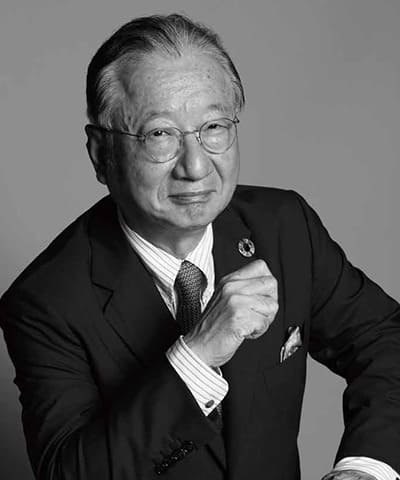
Photo: K. Kurigami
Founder of the Studio
TAKI Hisao
Born in Tokyo, TAKI graduated from the Tokyo Institute of Technology—now the Institute of Science Tokyo—in 1963.
Following his father’s sudden death in an accident in 1975, he inherited the family business. Alongside managing a transit advertising company, he devoted himself to a wide range of cultural, artistic, and educational initiatives. These included promoting Public Art, establishing the International Takifuji Art Award for art university students in Japan and abroad, encouraging exchange between Japanese and international students, and developing the concept of Pair Go.
Through these activities, he established a business model that successfully combined corporate management with cultural and educational initiatives.
In 1996, he founded the restaurant information website “Gurunavi.” In 2020, he was named a Person of Cultural Merit in recognition of his contributions to culture, the arts, and food culture.
He currently serves as the founder and chairman of NKB INC., chairman of Gurunavi, and chairman of the Japan Traffic Culture Association.
His guiding belief is that “Japan must move beyond economic-first thinking and place culture and the arts at the foundation of nation-building.”
His major publications include “The Desire to Contribute: Homo Contribuens”, “Tokyo’s Diversity”, and “A Theory of Passionate Attachment to Tokyo”.