


Founder of CREARE Atami-Yugawara Studio, Hisao Taki: Encountering Art I
Hisao Taki, Chairman of NKB Inc., the company that operates CREARE Atami-Yugawara Studio, was originally a true science and engineering-oriented person. His appreciation and understanding of culture and the arts began to deepen when, in his youth, he helped with the business founded by his father, Fujitaro Taki.
Taki was born in Tokyo in 1940. During World War II, he was temporarily evacuated to Kagawa Prefecture on Shikoku Island, but returned to Tokyo while still in the early years of elementary school. In 1959, he entered Tokyo Institute of Technology (now Institute of Science Tokyo), where he studied mechanical engineering.
After graduating in 1963, Taki joined Mitsubishi Metal Corporation as an engineer, at a time when Japan was beginning its rapid economic growth. He found his work rewarding and was highly regarded by his supervisors, even receiving an offer to study in Germany on a company-sponsored program. However, he declined the opportunity and submitted his resignation in 1967, during his fourth year at the company. It was a decision driven by his strong desire to start his own business.
While studying entrepreneurship, Taki temporarily joined his father’s business. His father, an entrepreneur who ran a transportation advertising company, also had a deep appreciation for culture and the arts, and organized an annual event called the Transportation Culture Exhibition at Tokyo Station. The exhibition featured a section showcasing original works by renowned artists, and Taki was entrusted with working with approximately 40 painters.
Throughout the year, he visited the artists’ homes with small seasonal gifts, introducing himself as “Fujitaro’s son,” and requesting new works for the exhibition. At times, he would return carrying completed pieces that the artists had created especially for the event.
Among these artists were:
Heihachiro Fukuda, Takeshi Hayashi, Togyu Okumura, Kyujin Yamamoto, Ichiro Fukuzawa, Kazumasa Nakagawa, Meiji Hashimoto, Tatsuo Takayama, Kaii Higashiyama, Kenji Yoshioka, Yasushi Sugiyama, Hideo Nishiyama, Setsuko Migishi, Kiyoko Kataoka, Fumiko Hori, and many others.
They were all celebrated figures of Japanese art history—artists whose names today belong to a remarkable generation that has passed into history.
The artists were amused by Taki’s fearlessness and straightforward personality. Among them, the one who became especially fond of him was Kyujin Yamamoto (1900–1986), who would later receive the Order of Culture, one of Japan’s highest honors in the arts.
Yamamoto was known for rarely meeting with people, yet he welcomed Taki into his home and shared many behind-the-scenes stories from the art world.
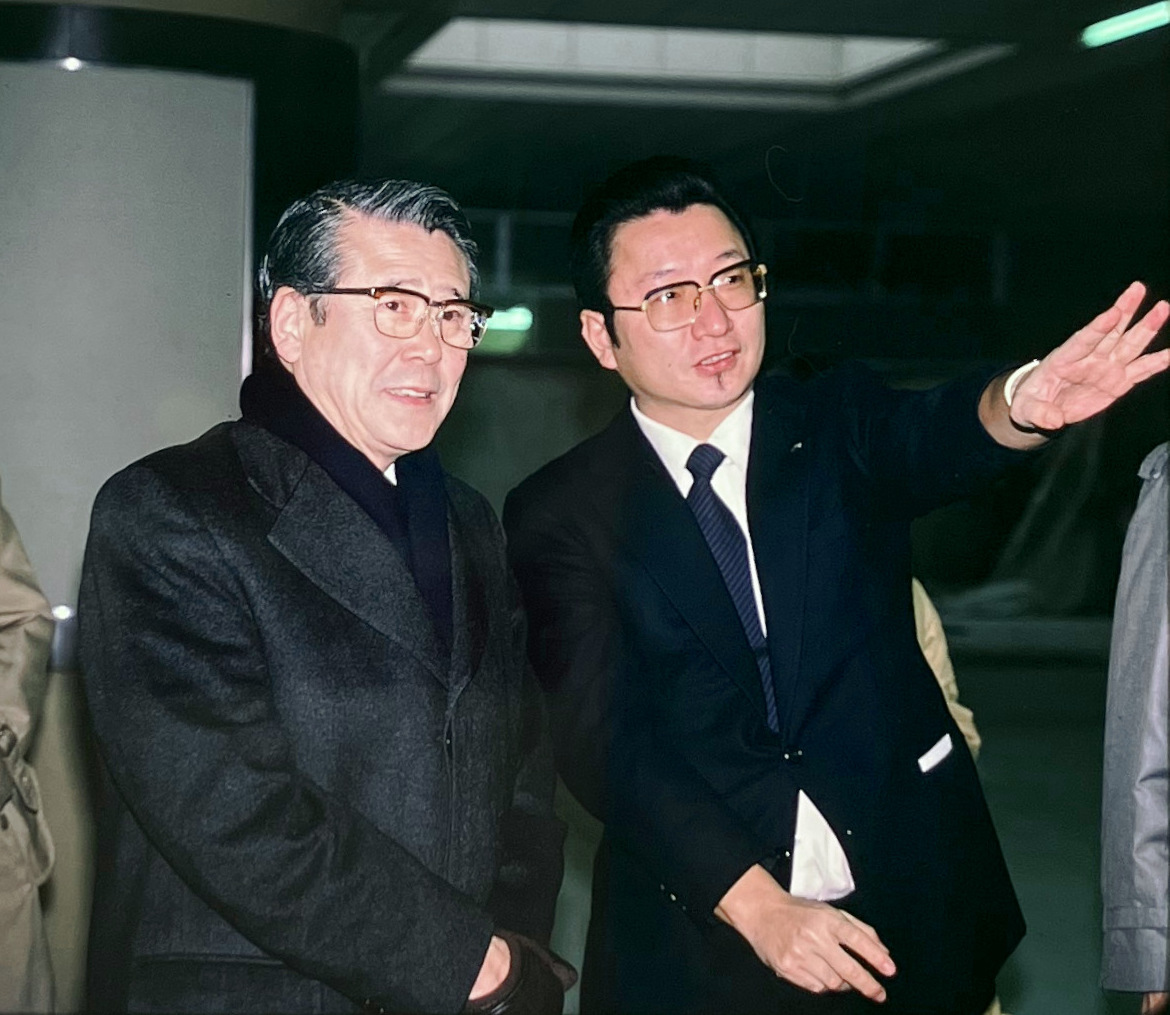
Kyujin Yamamoto, who taught at Tokyo University of the Arts and Joshibi University of Art and Design (then known as Joshibi College of Art and Design), had many students, one of whom was Ikuo Hirayama.
“Mr. Hirayama was a person of extraordinary dedication. I have taught many people, but I have never seen anyone who worked as hard as he did. There was even a time when I wondered whether he would truly achieve greatness. But then, one day, he suddenly took a great leap forward. It was remarkable. The results of his efforts truly do come to fruition.”
Kiyoko Kataoka (1905–2008) lived in Kugenuma Kaigan, Fujisawa City. Her home was a modest yet beautiful traditional Japanese house. Whenever Taki visited, she would always make time to see him, offering tea and sweets despite her busy schedule. Although they were separated by approximately 35 years in age, she treated him like a friend—a kindness Taki has never forgotten.
Deeply captivated by Kataoka’s paintings, Taki later commissioned original works from her when he became involved in promoting public art. He believed that her powerful brushwork would be especially striking when translated into public art, particularly using ceramic relief as the medium.
Beginning with the ceramic relief artwork “Four Seasons in Edo” (1978) at Sunshine City, followed by “Auspicious Fuji” (1983) at Fujisawa City Hall and “Mount Tate” (2012) at Toyama Airport, all six public artworks based on Kataoka’s original designs were created as ceramic reliefs. Today, they continue to adorn public spaces with their powerful presence and enduring vitality.
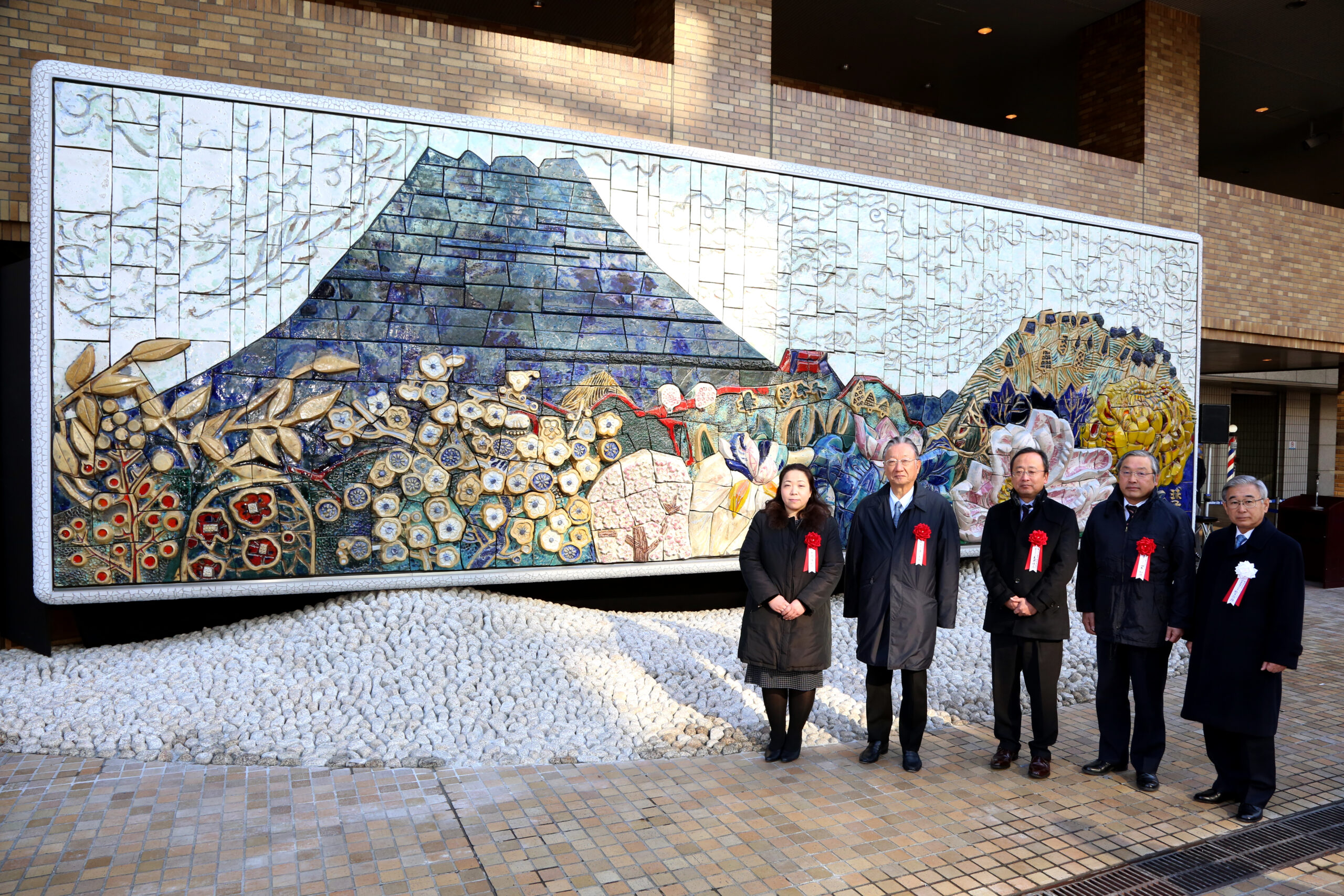
Fumiko Hori (1918–2019), who served as a professor in the Japanese Painting Department at Tama Art University, lived in Oiso. At the entrance to her home stood a Japanese silverberry tree (Hortus lucidus) that was more than 300 years old. Setsuko Migishi (1905–1999) also lived in Oiso, but her house was located on top of a cliff. Taki still remembers how difficult it was to climb up to her home when it snowed.
After his father passed away unexpectedly in 1975, Taki succeeded his father’s business. However, during the nine years prior to that, except for a period of extended travel in the United States, he visited the homes of artists every season. These encounters helped him develop an eye for appreciating artworks, deepen his understanding of the social significance of art, and gain insight into trends in both the Japanese and international art worlds.
Today, Taki advocates for the legislation of the “1% for Art” system, which allocates approximately one percent of public construction costs to artworks related to those buildings. It was during his visits with these artists that he first learned that similar systems existed in Europe and the United States.
Those nine years of experiences became the foundation for his later efforts in promoting public art, as well as advancing various cultural, artistic, and educational initiatives.
