


Airport-Initiated Art Supporting Regional Revitalization
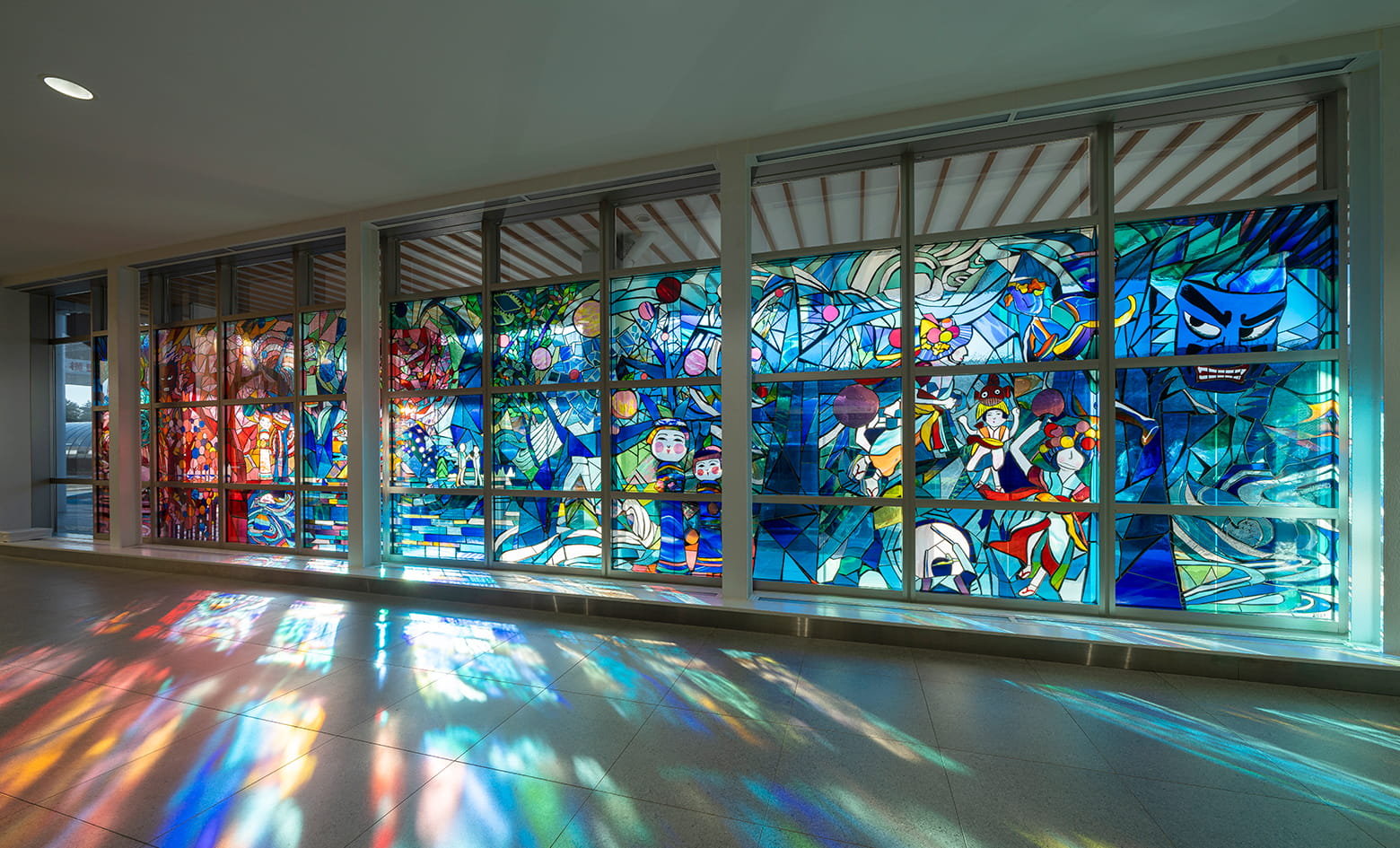
Aomori Airport, Stained Glass ” To the Deep Blue Forests”
Original Design & Artistic Supervision: Chie Morimoto, 2021
Dimensions: 2.4 m (H) × 5.9 m (W) × 2 panels (illuminated by natural light)
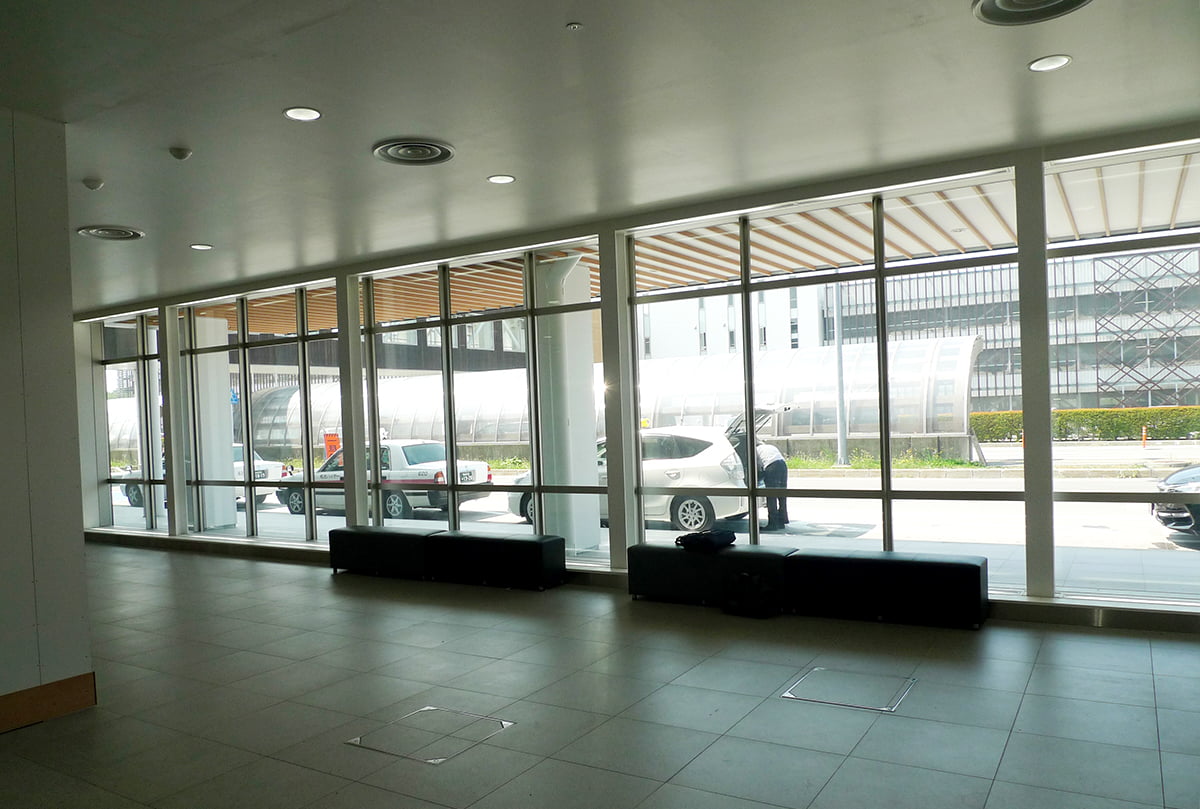
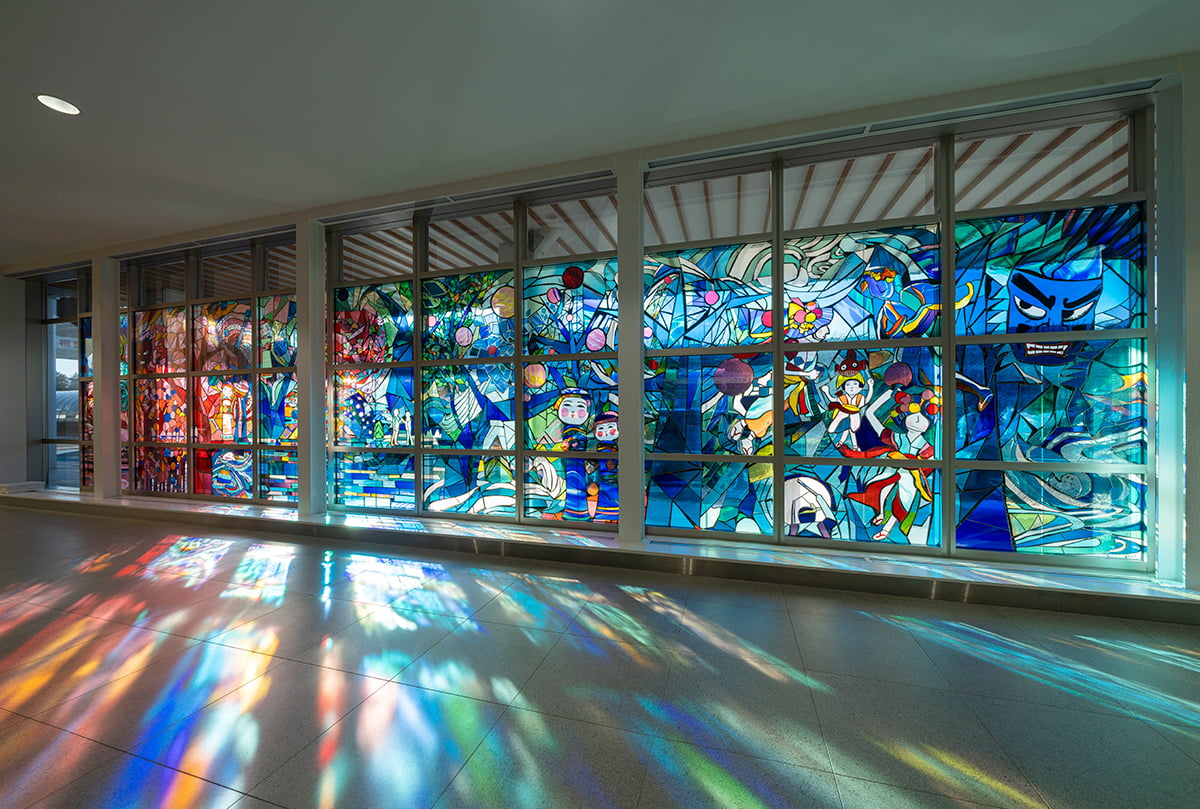
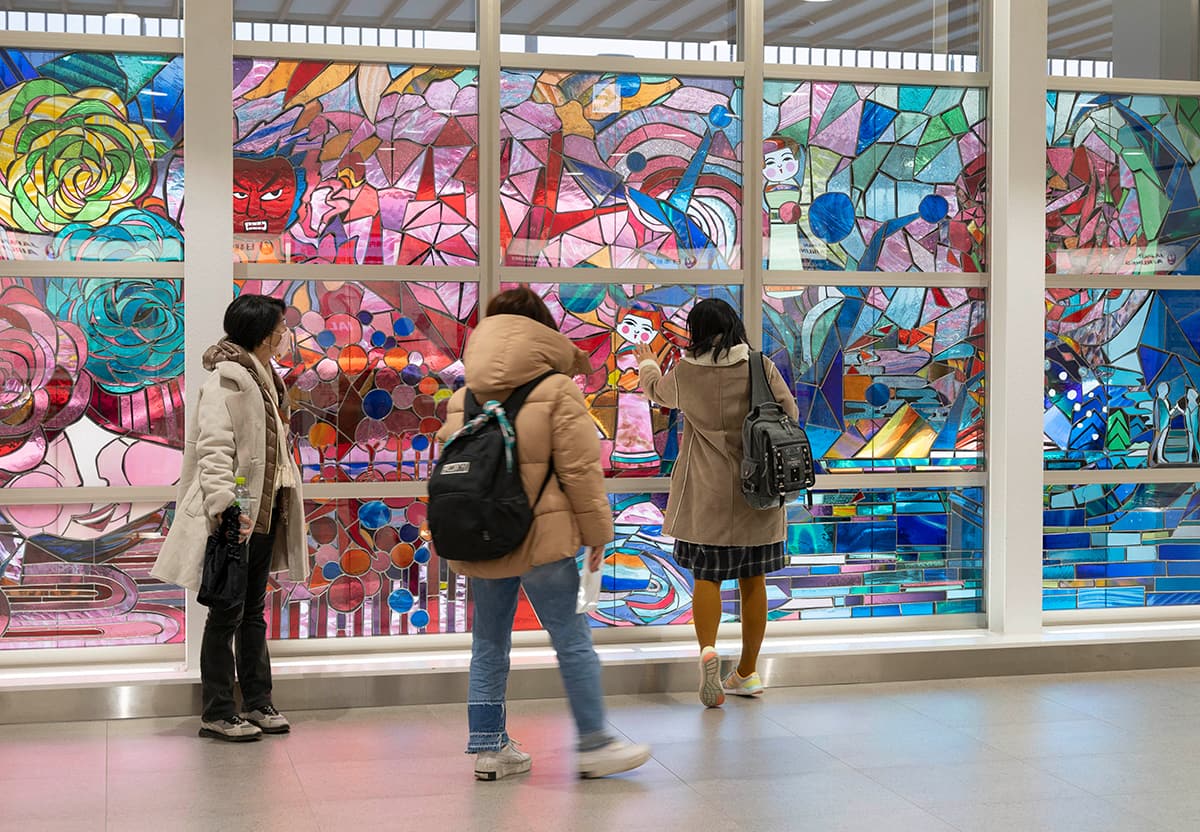
Installed in the domestic ticket lobby on the first floor of the passenger terminal as part of the renovation of Aomori Airport, the stained glass artwork “To the Deep Blue Forests” was designed and artistically supervised by Chie Morimoto, an art director from Misawa City, Aomori Prefecture. Inspired by her wish to “welcome visitors arriving by air with the blue light of Aomori,” the work vividly portrays the prefecture’s iconic festivals, landscapes, and cultural heritage—including the Nebuta Festival, Haneto dancers, traditional kokeshi dolls, and the Oirase Gorge—using approximately 3,200 pieces of glass in 85 different colors.
Takashi Tanabe, General Manager of the General Affairs Department at Aomori Airport Building Co., Ltd., explained, “The concept behind the terminal renovation was ‘A Forest Terminal.’ We wanted to create a welcoming space that reflects Aomori’s nature and culture, with a sense of openness and storytelling. This artwork embodies that vision perfectly.”
Hazuki Nishimura of Japan Airlines, who works at the ticket counter directly opposite the stained glass, shared her own perspective: “We often see people stopping to admire the artwork, taking photographs, or using it as a meeting point. During the COVID-19 pandemic, when the atmosphere inside the airport felt subdued, this stained glass brought light back into the terminal. As both a resident of Aomori and an airport employee, I feel incredibly proud of it.”
The artwork has also been featured on numerous websites and social media platforms, including AMAZING AOMORI, the official tourism website of Aomori Prefecture, and AOMORI GOKAN, a collaborative initiative among five museums in the prefecture to promote Aomori’s art and culture to audiences in Japan and abroad. Through this exposure, it has also contributed to attracting visitors to the region.
Visitors who have experienced the work in person have shared comments such as, “It sparkles beautifully in the natural light—it’s absolutely mesmerizing,” and “Everyone passing through Aomori Airport should take the time to see it.”
Public Response Boosts Staff Morale
Hiroshima Rapid Transit Astram Line, Hondori Station
Stained Glass “Town of Evening Calm, Country of Cherry Blossoms”
Original Design & Artistic Supervision: Fumiyo Kōno, 2020
Dimensions: H 2.8 m × W 7.0 m (LED)
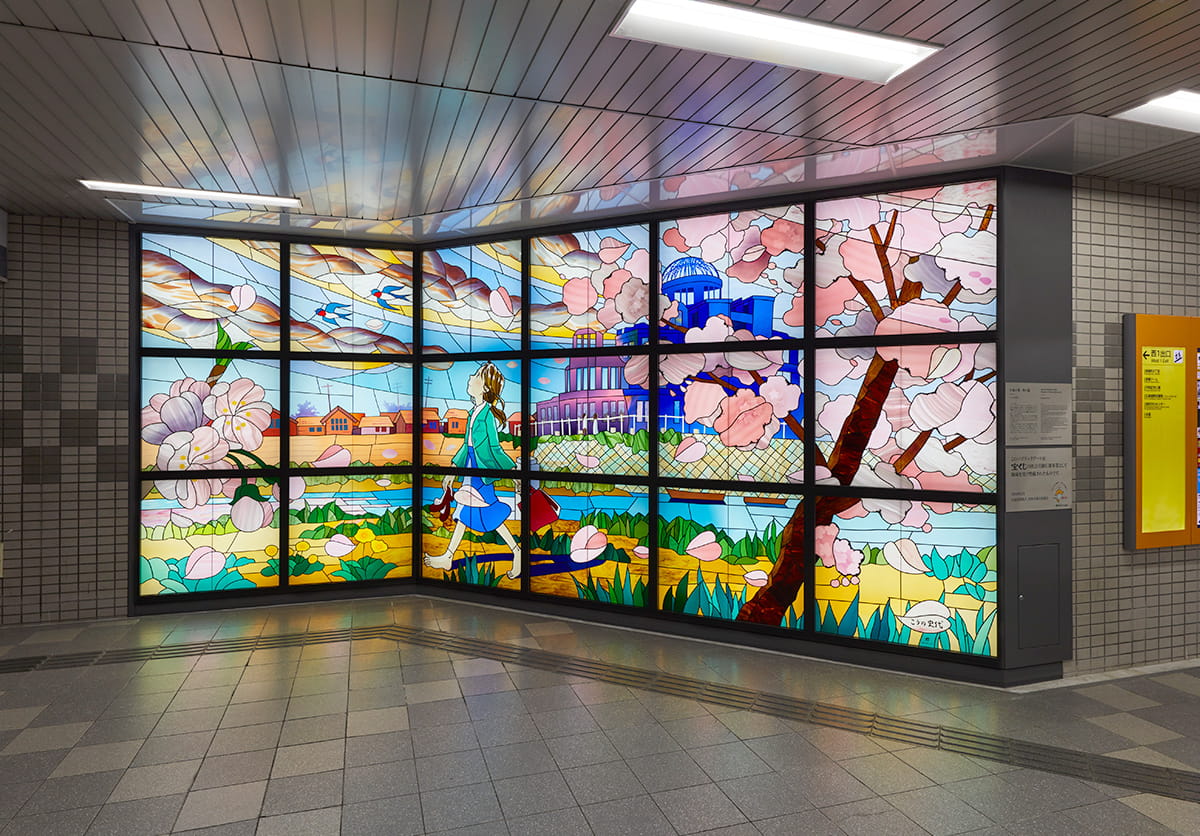
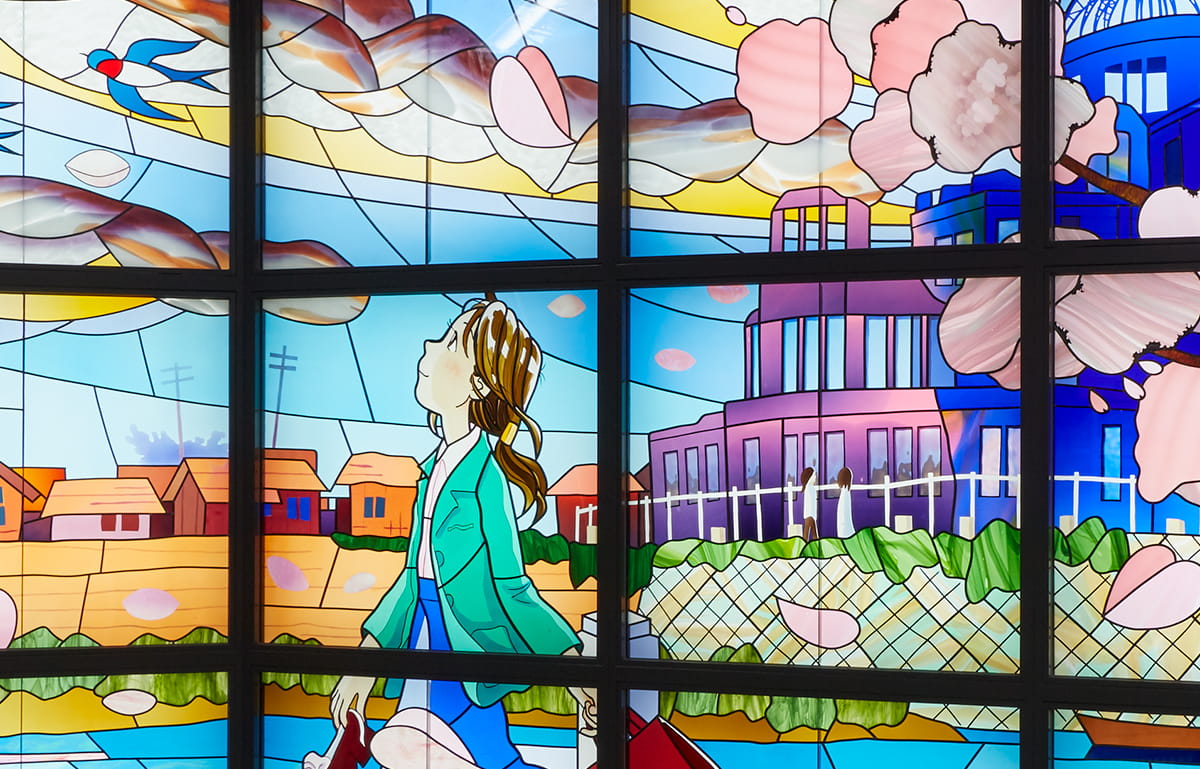
Inspired by a memorable scene from Town of Evening Calm, Country of Cherry Blossoms, the acclaimed manga by Hiroshima-born artist Fumiyo Kōno, this stained glass artwork is set in Hiroshima ten years after the atomic bombing. Installed on the wall near the staircase outside the west ticket gate at Hondori Station, it has become a striking visual landmark that welcomes and inspires station users.
Shuichi Kaneyuki and Satoko Takaoka of the General Affairs Department at Hiroshima Rapid Transit, the operator of Hondori Station, spoke about the significance of the installation. “As the artwork is located in an underground passageway, it transformed what had once been a rather dark space into a bright and welcoming one,” said Kaneyuki. Takaoka added, “This artwork conveys the precious value of peace, and I believe it is especially meaningful that it is installed at Hondori Station, the nearest station to both the Atomic Bomb Dome and the Hiroshima Peace Memorial Museum.”
The artwork has also become a popular subject for visitors’ photographs on social media. Comments such as “The bright, beautiful artwork brought me a sense of peace. Stained glass is the perfect medium,” and “Such a large, beautiful, and heartwarming work. Thank you, Fumiyo Kōno!” have been shared online. The positive public response has added new value to Hondori Station, delighting passengers while also boosting staff morale.
“Captain Tsubasa” Art Supporting Community Revitalization and Promotion !
Saitama Railway Saitama Stadium Line, Urawa-Misono Station
Stained Glass “Captain Tsubasa: Spread Your Wings Around the World”
Original Design & Artistic Supervision: Yoichi Takahashi
Installed in 2018
Dimensions: H 1.6 m × W 20.0 m (Natural Light)
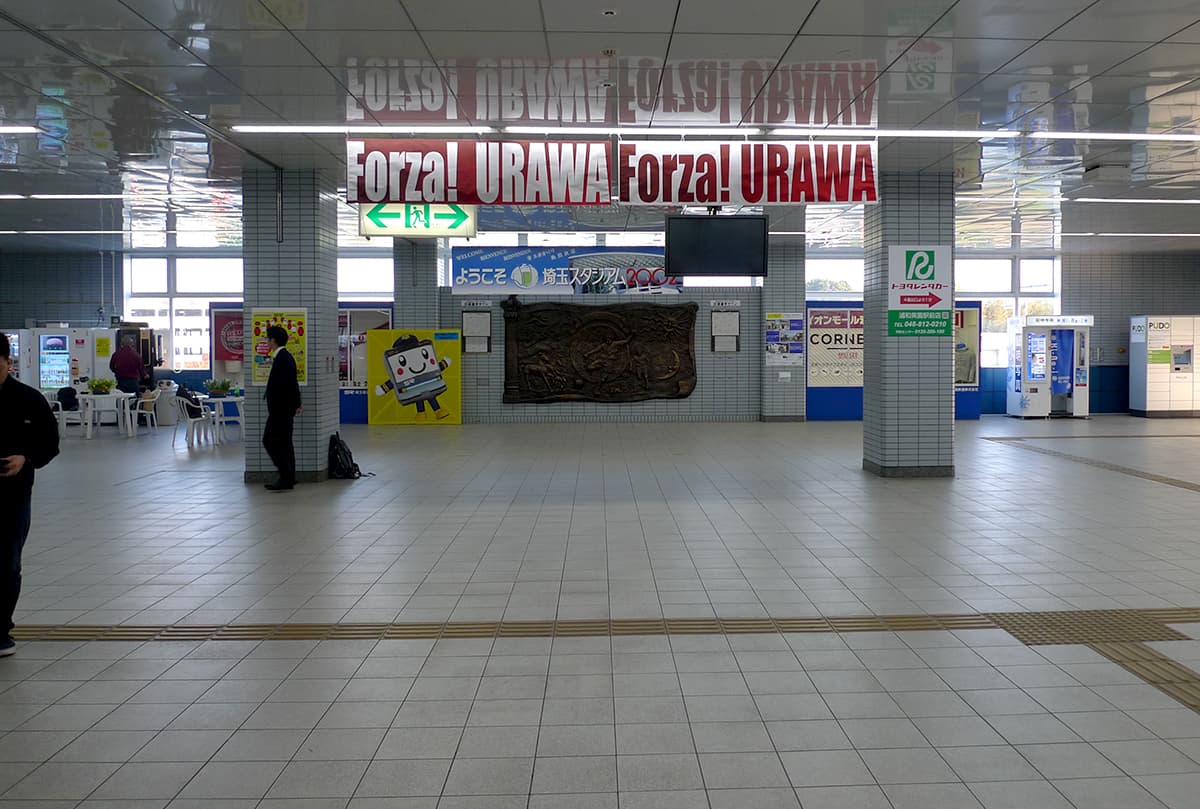
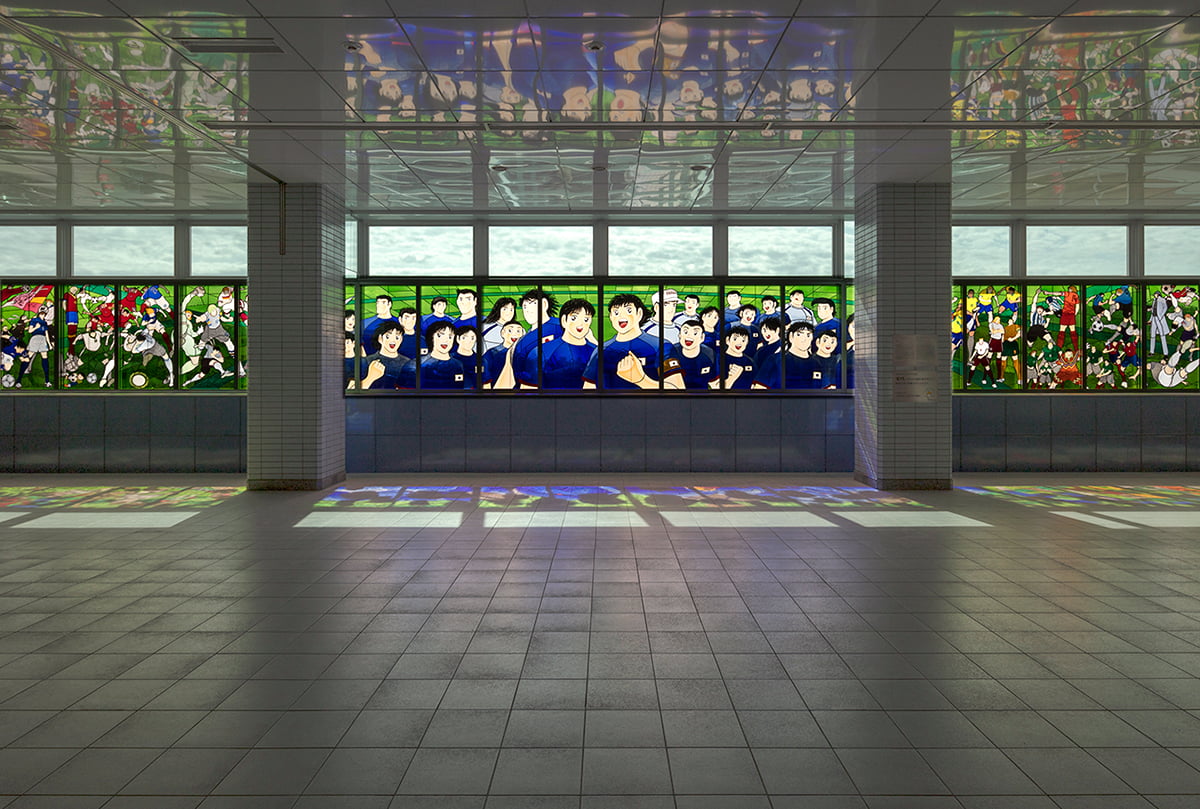
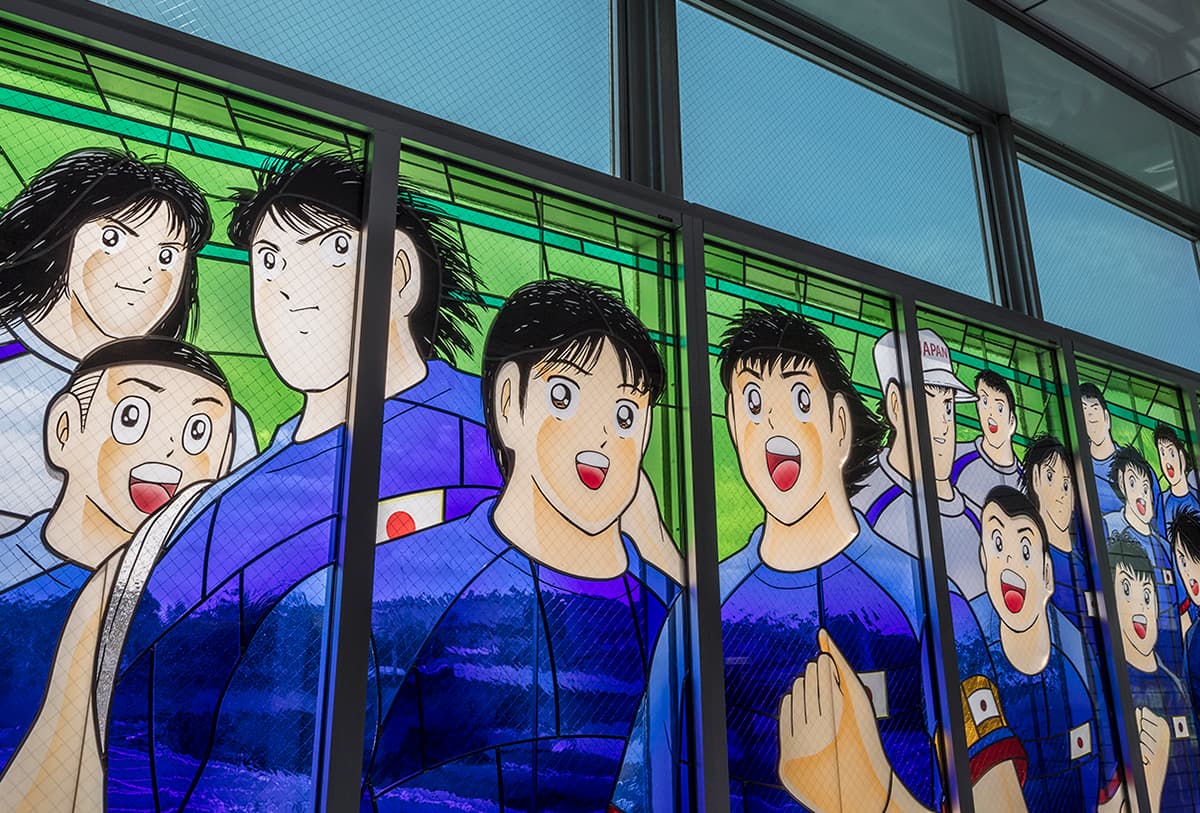
Urawa-Misono Station is the closest station to Saitama Stadium, a renowned destination for soccer fans. Anticipating the Tokyo 2020 Olympic Games, this stained glass artwork was installed as a gesture of hospitality toward soccer fans visiting from Japan and abroad. Inspired by the globally popular soccer manga Captain Tsubasa, the artwork welcomes visitors with 99 characters from the series, each wearing the uniforms of different countries, just beyond the ticket gates.
Stretching 20 meters wide, the expansive artwork is filled with energy and excitement, completely transforming the atmosphere of the station. Masanori Ehara of the Sales Promotion Department at Saitama Railway commented, “The station has become much brighter and more vibrant. Many visitors take photos of the signature of creator Yoichi Takahashi incorporated into the artwork, or take commemorative photos with their favorite characters. International visitors, in particular, almost always stop to take pictures. On X (formerly Twitter), we have seen many comments not only from longtime Captain Tsubasa fans but also from people overseas.”
His colleague Miki Okawa added, “The artwork catches people’s attention even from a distance, and it can be seen from outside the station as well. In addition to serving as a popular meeting place, it has also been used as a promotional tool—for example, pop-up shops inside the station have posted on X that they are selling products ‘in front of Captain Tsubasa.’ I think this shows how widely the stained glass has been shared and appreciated by many people.”
With the cooperation of Saitama City, the station area was also decorated with Captain Tsubasa flags and panels during the Tokyo 2020 Olympic Games. The artwork has further contributed to community revitalization beyond the role of station public art, including being selected as a destination in anime location-rally events that guide visitors to anime-related spots throughout Saitama Prefecture.
