


Original Painting and Supervisor |
Dyeing Craftsman TAKATSU Akemi TAKATSU Akemi |
|---|
2025
H4.0m × W3.2m
JR Kyushu Kumamoto Station, inside the ticket gates of the conventional line, 1st floor
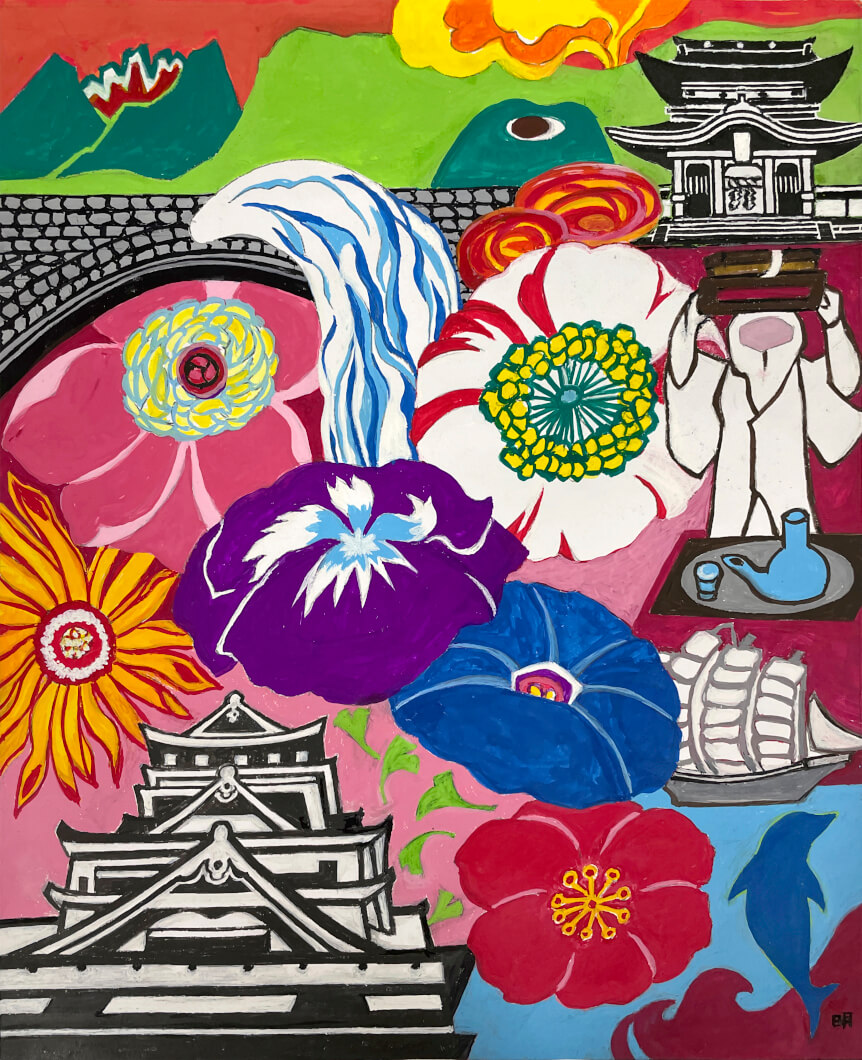
Original Painting
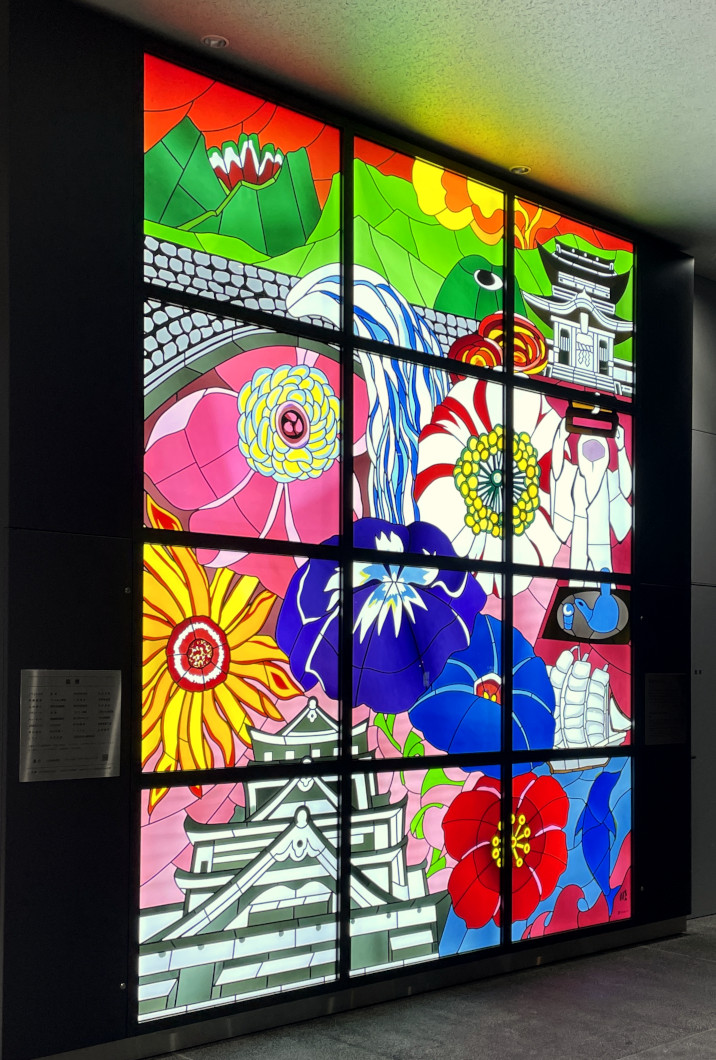
Full view of the artwork


Close-up detail of the artwork featuring Mount Nekodake, Tsujunkyo Bridge, and Komezuka
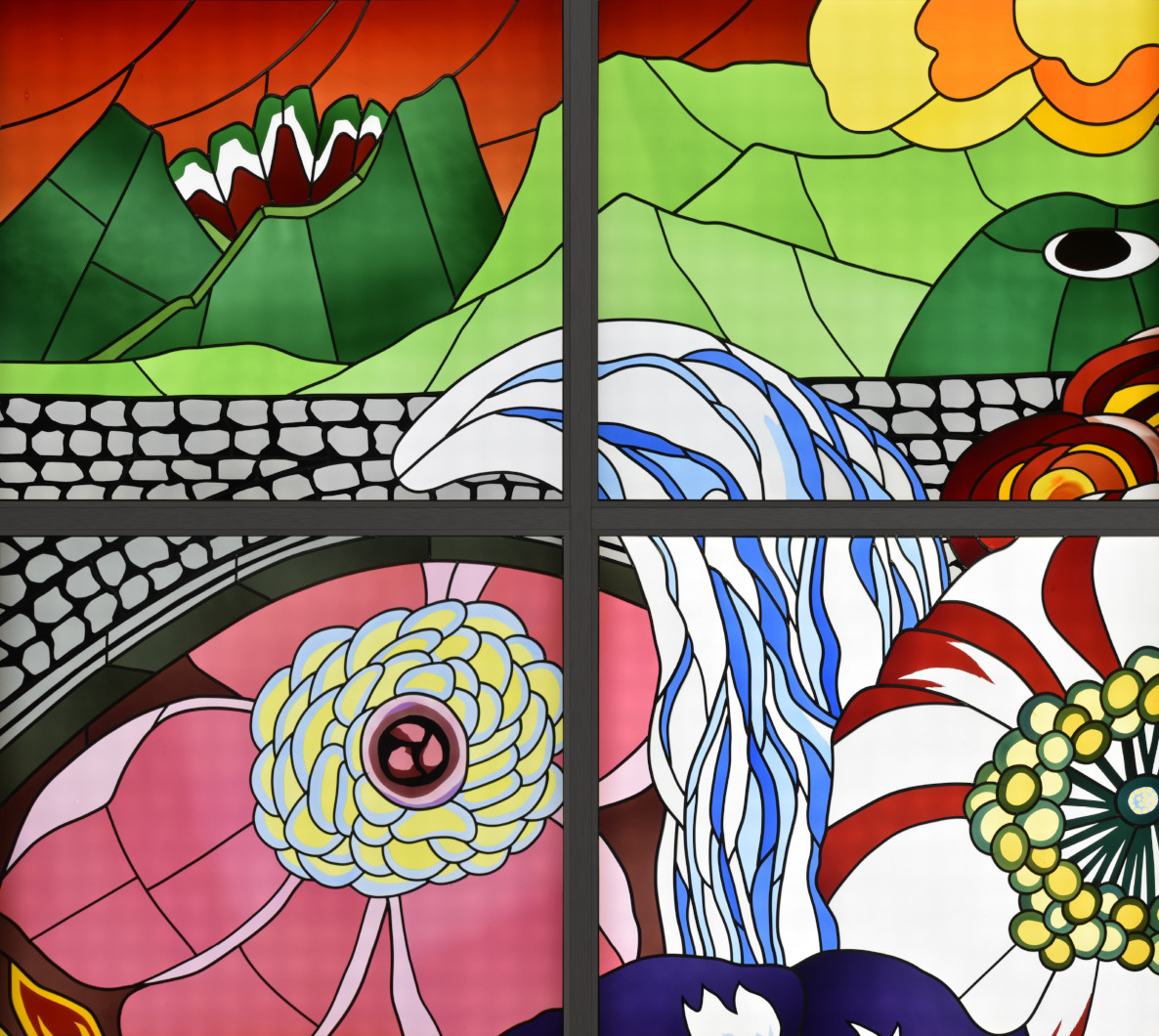
Close-up detail of the artwork featuring Mount Nekodake, Tsujunkyo Bridge, and Komezuka
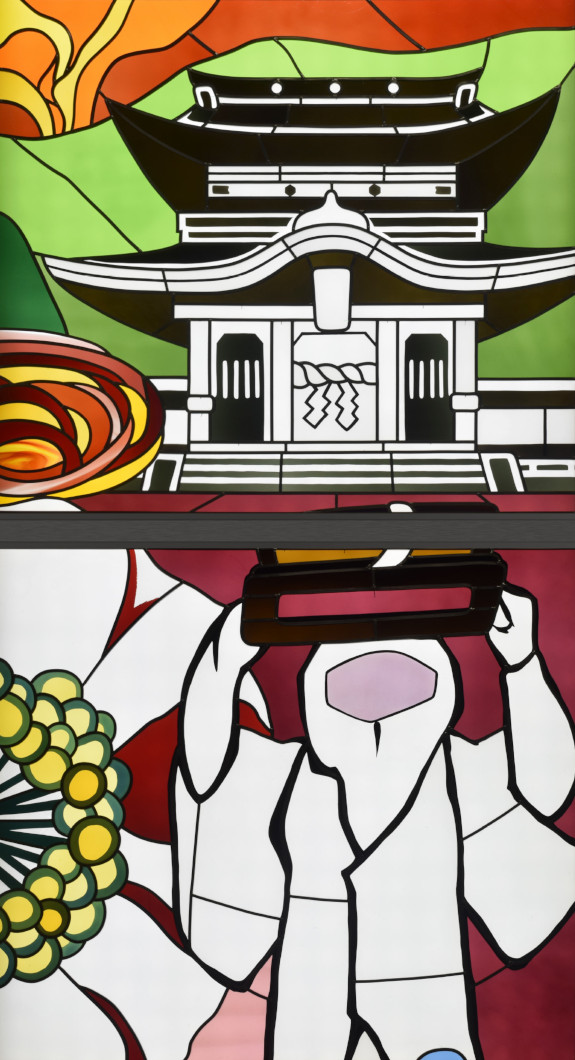
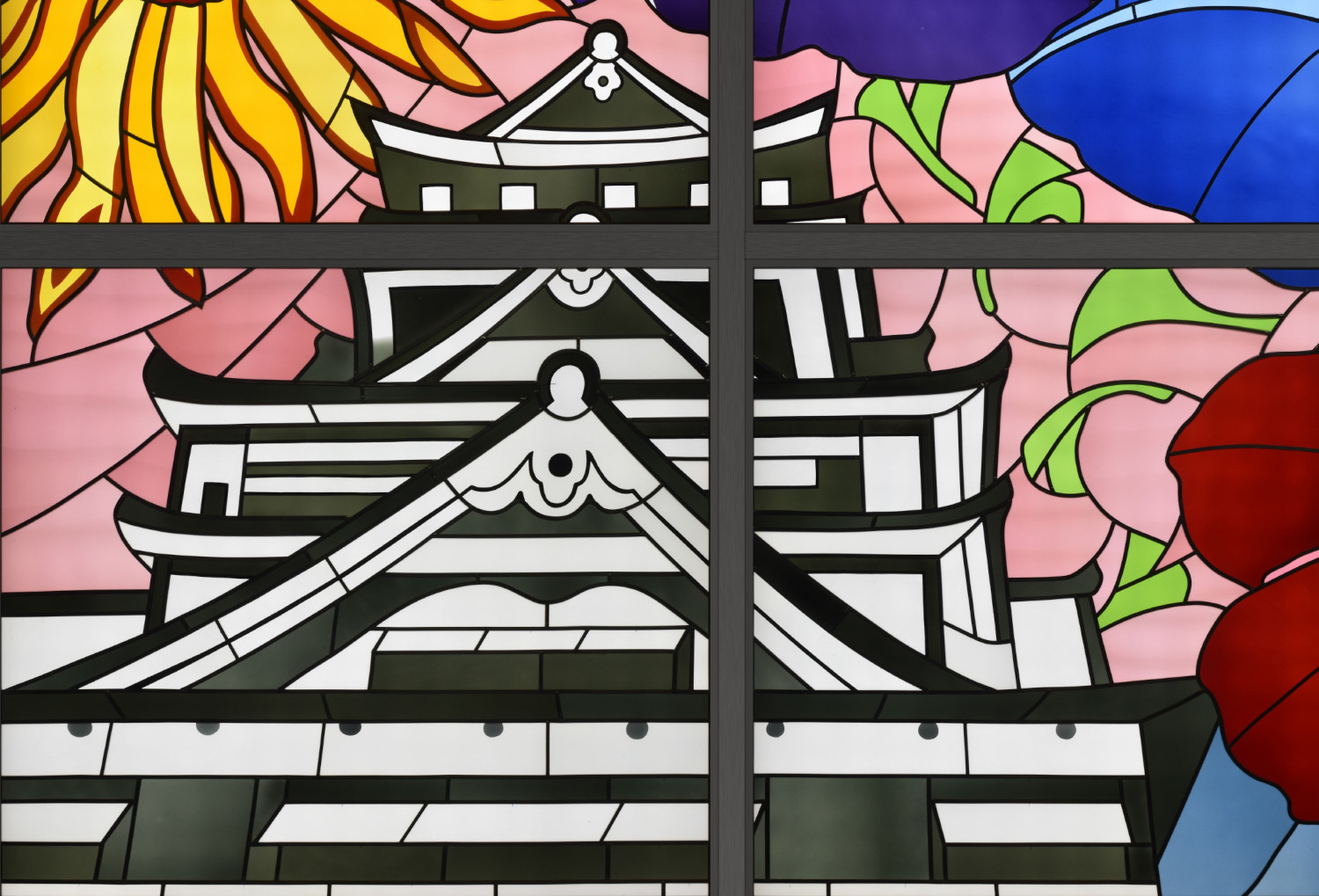
Close-up detail: Kumamoto Castle
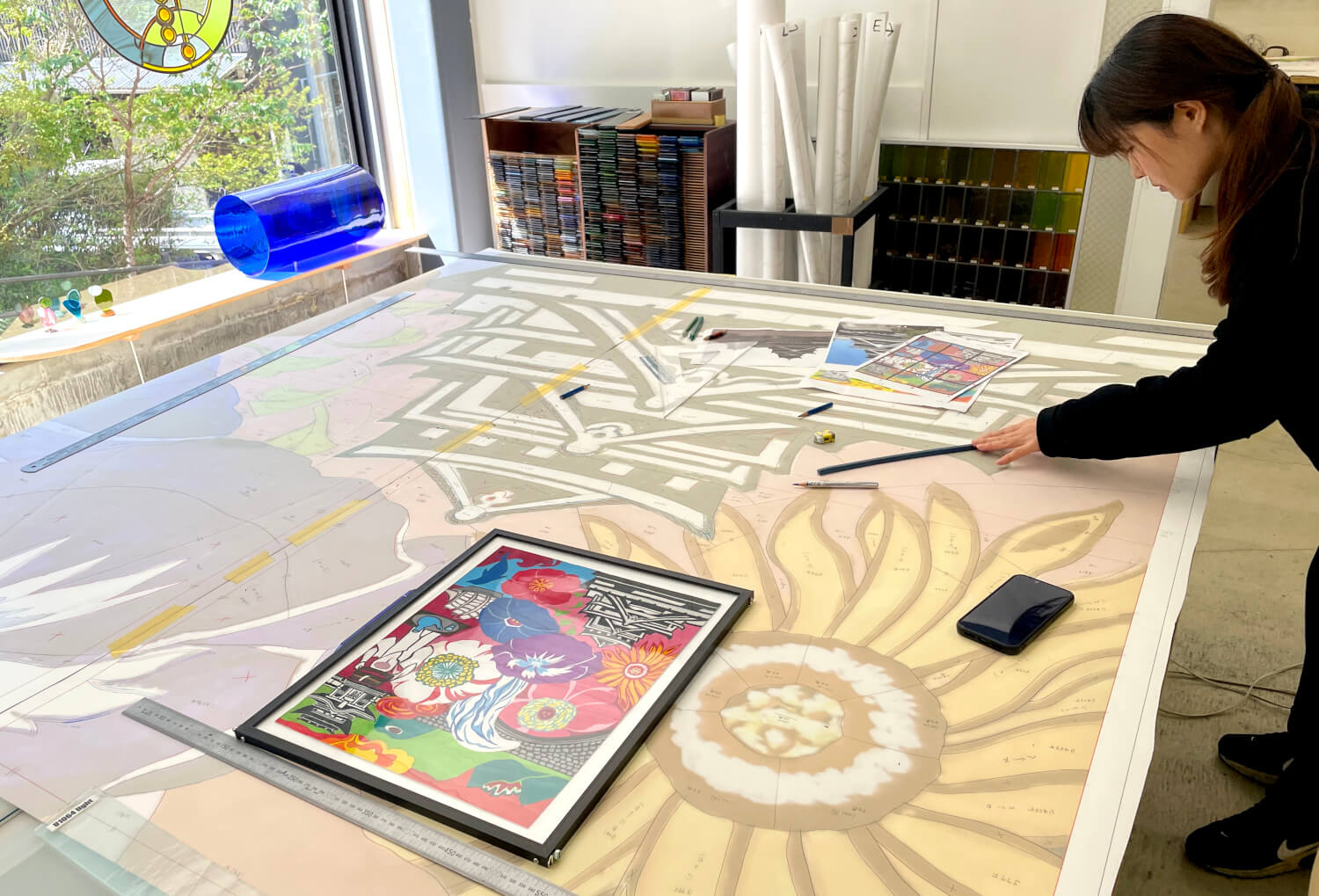
Based on the original painting, the artwork is “translated” into a full-scale production drawing.
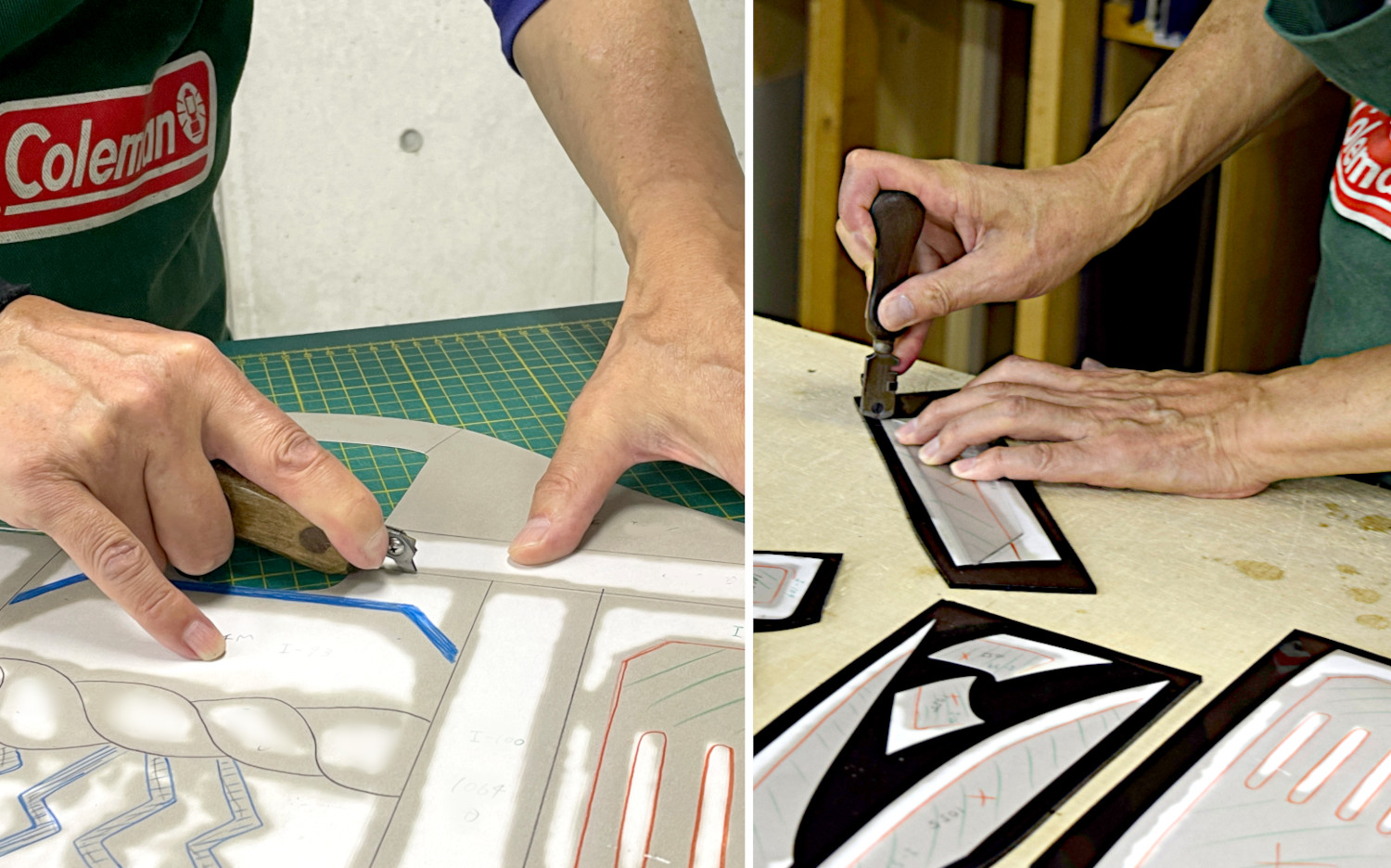
The glass is cut by hand based on the translated template
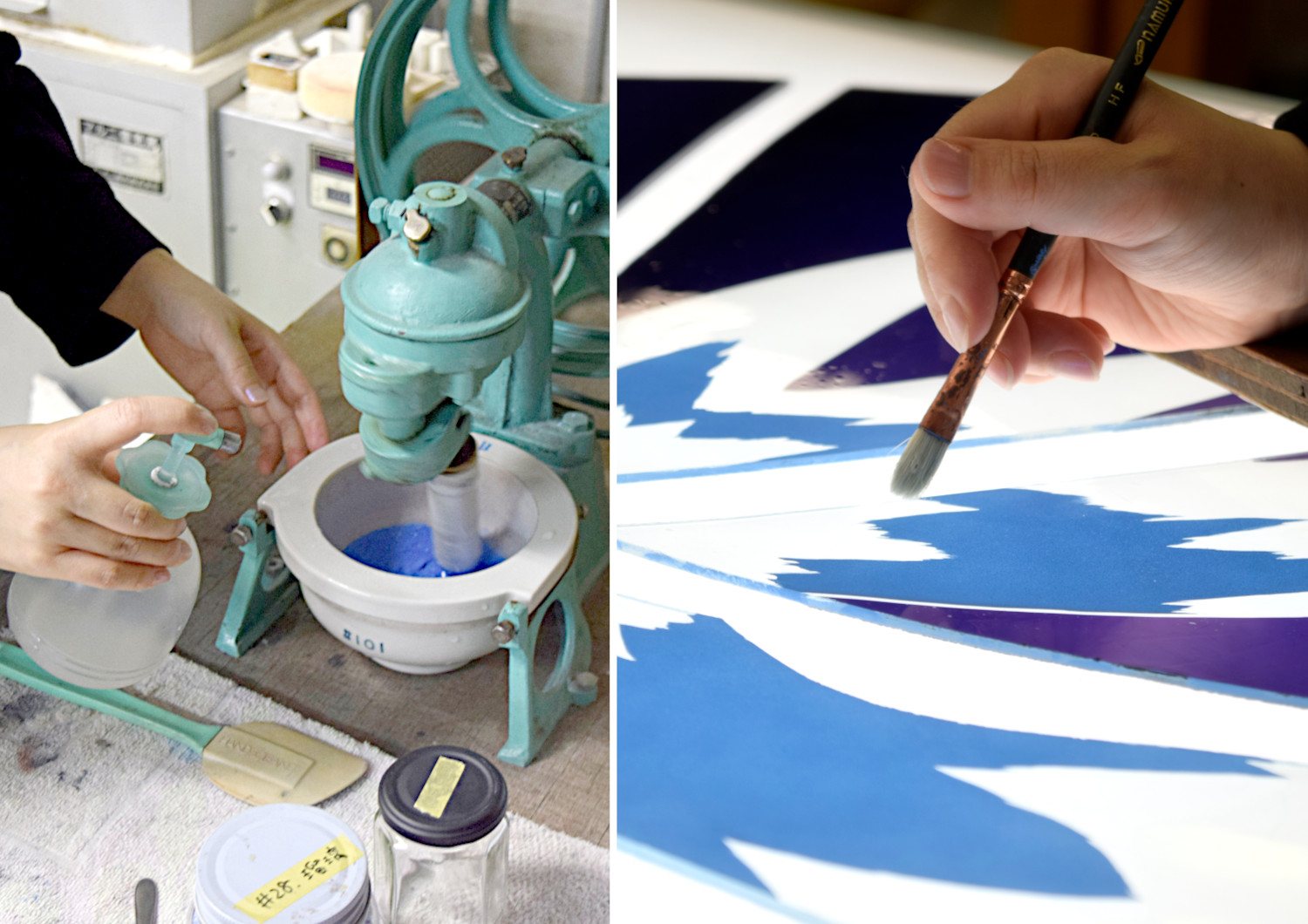
The glass is coated with color-matched pigments.
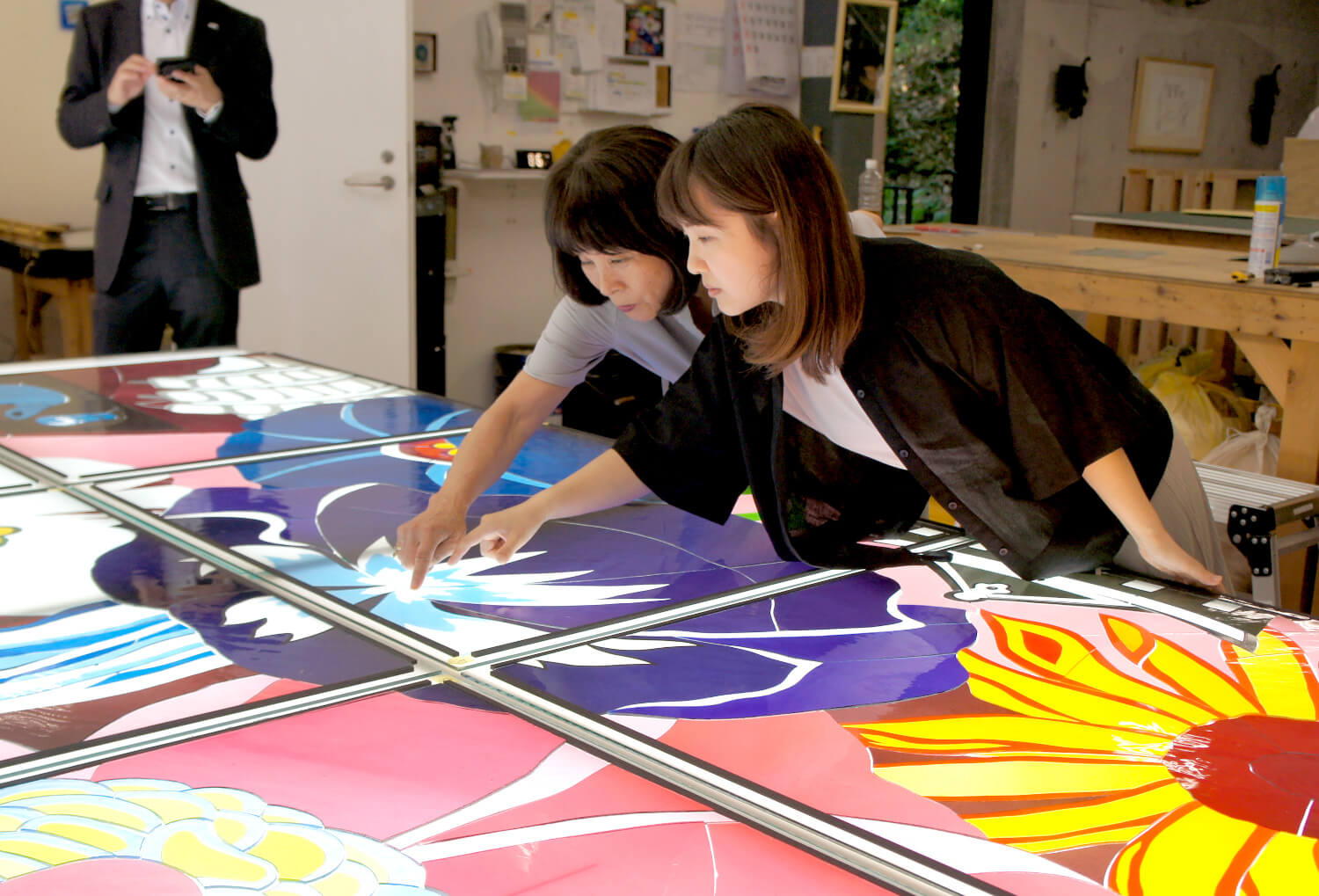
Ms. TAKATSU, inspecting the art piece at the atelier
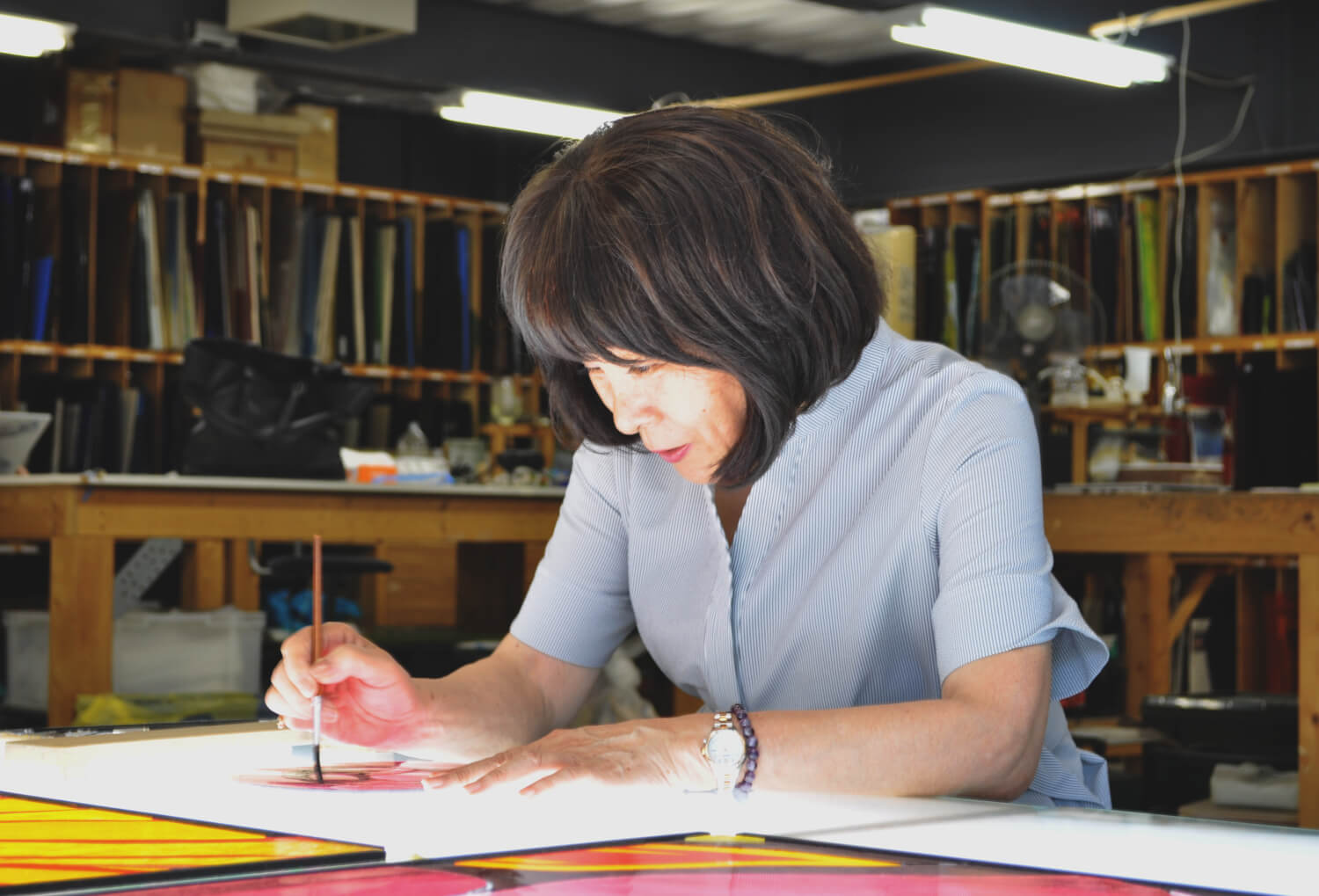
Painting work by Ms. TAKATSU
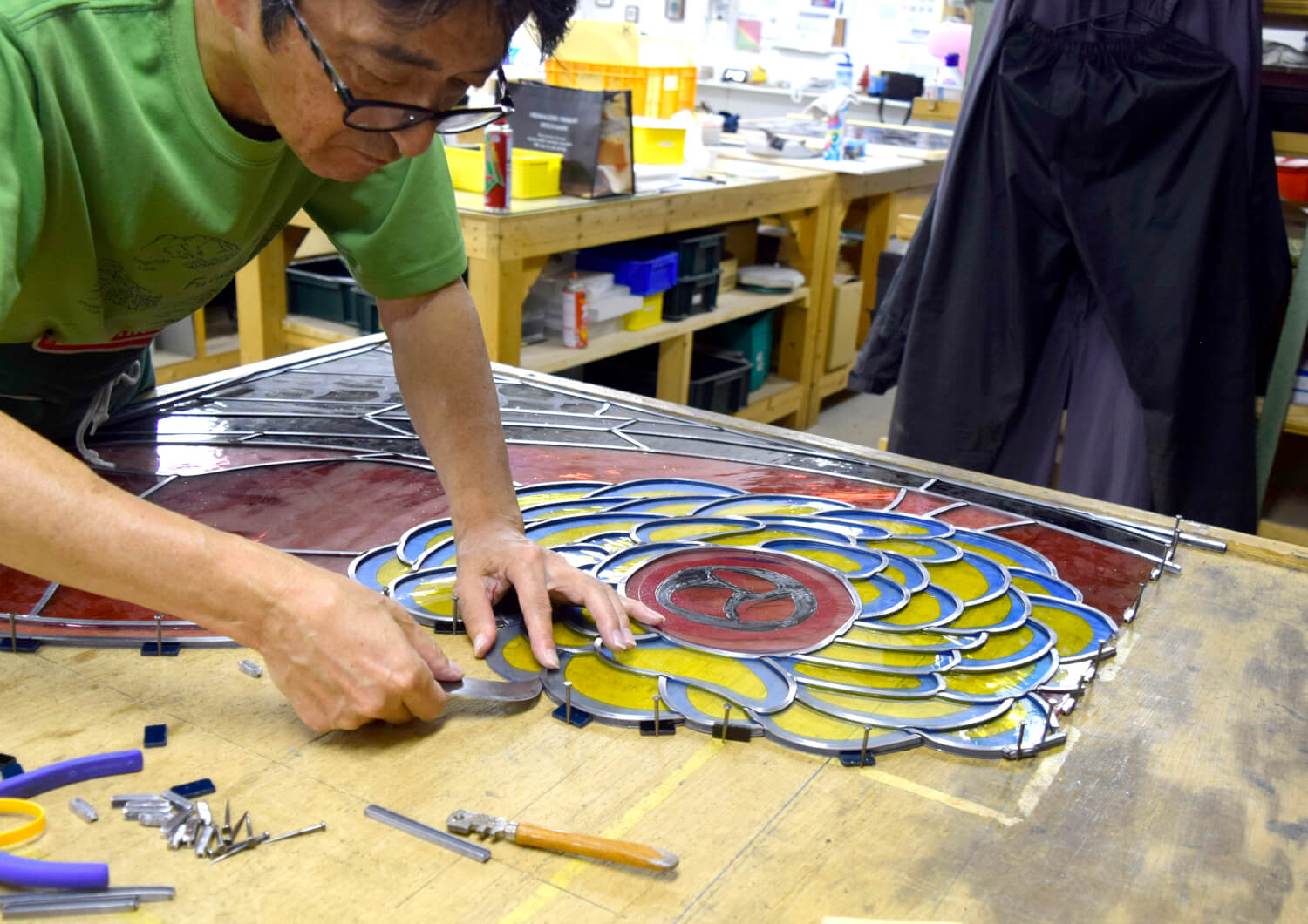
The glass pieces are connected with lead cleats and held in place with soldering, a traditional red chamois technique that has been used for more than 1,000 years
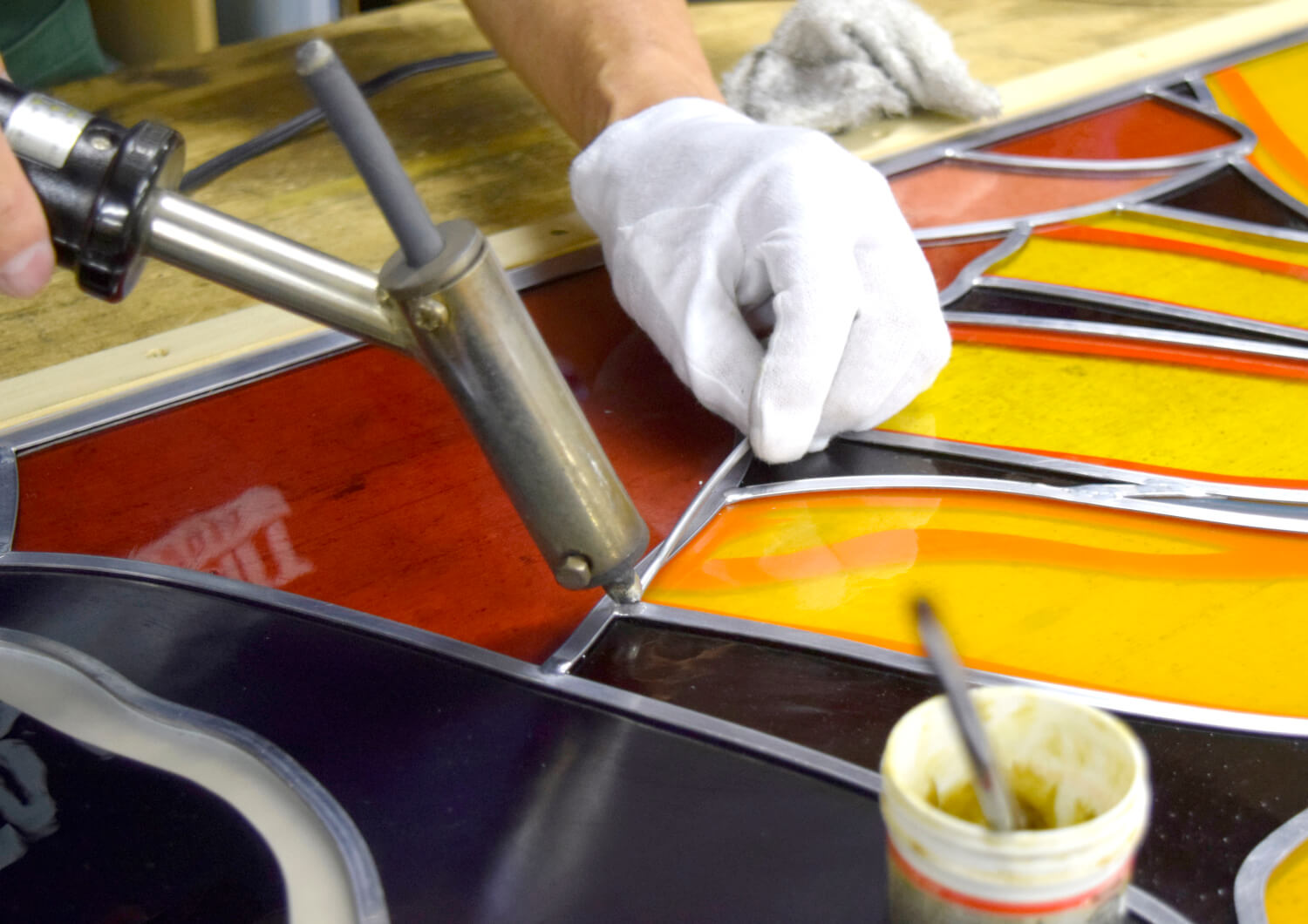
The glass pieces are connected with lead cleats and held in place with soldering, a traditional red chamois technique that has been used for more than 1,000 years
Production Notes
The original design for this artwork was created by Akemi Takatsu, a dyeing artist from Kumamoto. Inspired by Takatsu’s desire to use the power of art to bring vitality to her hometown as it continues to recover from the Kumamoto Earthquake, the Japan Traffic Culture Association initiated this project.
Measuring 4.0 meters high and 3.2 meters wide, this monumental artwork vividly and powerfully depicts the distinctive character and cultural heritage of Kumamoto, including the Higo Rokuka, the six traditional flowers of Kumamoto; Kumamoto Castle; Tsujunkyo Bridge; and Unari, ceremonial women who participate in the Onda Festival.
Planning : Japan Traffic Culture Association
Sponsorship : Aisin Kyushu Corporation, Aoyagi, Akami Hebiishi Shrine, Ajisai Ichiba, Aso Pharmaceutical Co., Ltd., Entremets Kajyu, Ueda Shokai, Kai Orthopedic Clinic , Kyushu Electric Power Company, Incorporated, Kumamoto Kotsu Unyu, Kumamoto Daido Seika, RKK Kumamoto Broadcasting Co., Ltd., Kraftia, Kongo, Kongo Sokki, Q-NET Co., Ltd. , Saishunkan Pharmaceutical co.,ltd. , Sakurajyuji Group, Sanyo Bunka Jigyokai, JR Kyushu Trading Co., Ltd.
, JR Kumamoto City, SYSKEN Corporation, Jinnai Hospital, Seibu Electric Industry, Tsuyama Kaihatsu, Nishinihon , Denko, Haicom, The Higo Bank, Ltd., Hirai, Furusho Honten, Rokutanda Naika・Junkanki-ka, Ai Toshi Design , Kenchiku Jimusho, Aoi Hifuka, Justice Co. Ltd., Sonia Planners, D.S.G, TOMS, Niku no Hashimoto, Home Life Takata, Mashiki Hospital, Matsumoto Setsubi and all individuals and others who made donations
Artist Profile

TAKATSU Akemi
TAKATSU Akemi
Dyeing Craftsman
Born in Kumamoto city in 1947. Based on Kumamoto, working as a dyeing craftsman. As of 2012, Member of the Japan Fine Arts Exhibition, Trustee of Contemporary Arts and Crafts Association.Location : JR Kyushu Kumamoto Station, inside the ticket gates of the conventional line, 1st floor

Artist's Comments
Kumamoto is renowned for its six traditional flowers, which are referred to as the Higo Rokka. They have been passed down to the present day since the Edo period as the samurai warriors’ art of gardening, going through natural selection, and being developed and nurtured over many years,
The Higo Rokka are Higo Camellia, Higo Peony, Higo Iris,
Higo Morning Glory, Higo Chrysanthemum and Higo Sasanqua.
I am simply filled with awe when I look at the local scenery where the flowers bloom beautifully from season to season.
I hope that the vivid colors used on the stained-glass bring joy to the hearts of those who pass by.