


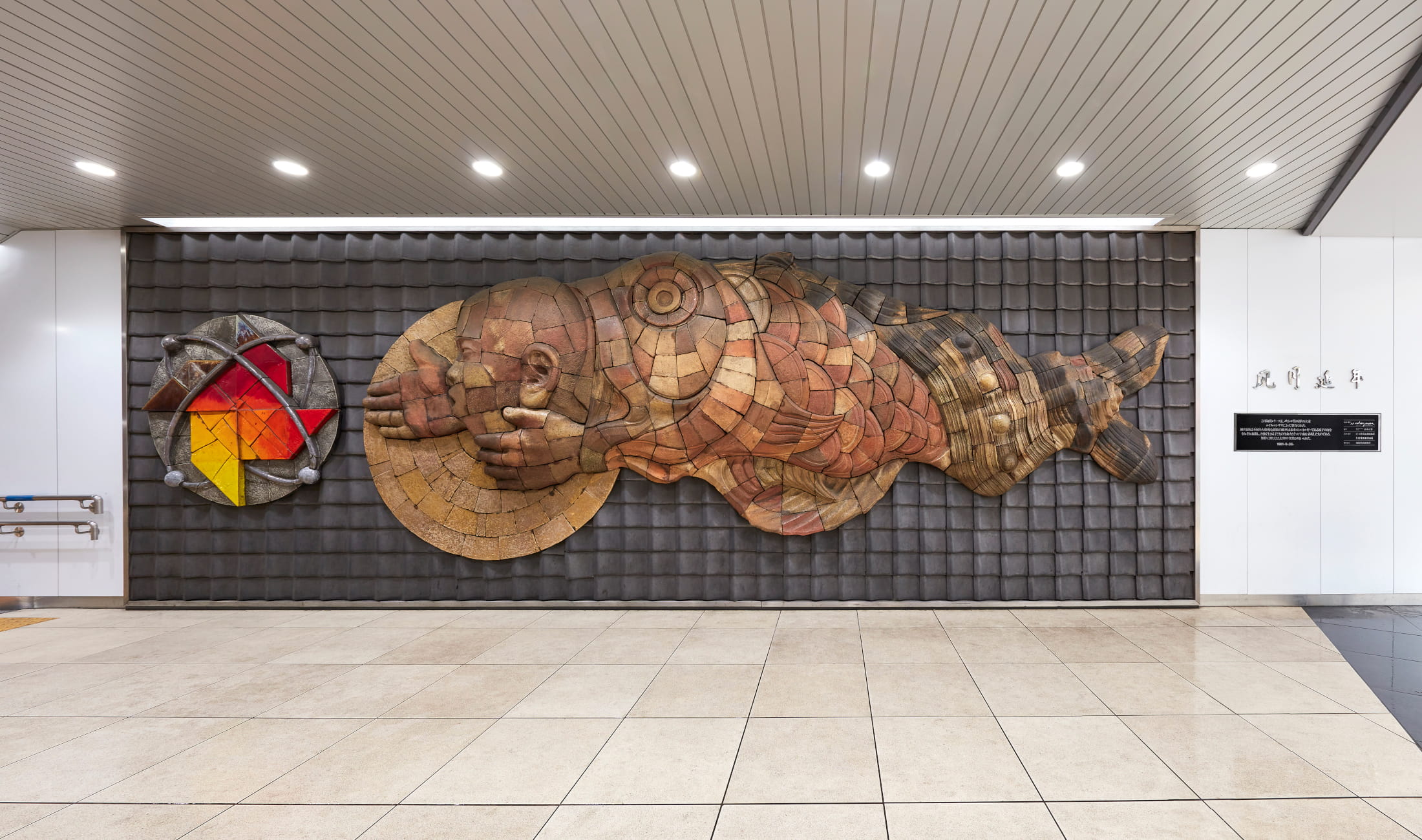
Original Painting and Supervisor |
Mural Artist NISHIZAWA Luis NISHIZAWA Luis |
|---|
1981
H3.0m × W8.0m
Front entrance concourse, Keisei Electric Railway Keisei Ueno Station


Close-up of the artwork (detail)

Close-up of the artwork (detail)
Production Notes
Mr. Luis Nishizawa, who came to Japan for the production of this work, traveled all over Japan with a strong interest in traditional culture and local customs. Especially, the brilliant color carp streamer and windmill strongly stimulated his creativity. Traditional Japanese roof tiles are used as the material of the background, and ceramic relief which was fired at an ascending kiln was used for the body of the carp streamer.
Planning : Japan Traffic Culture Association, Keisei Electric Railway
Artist Profile
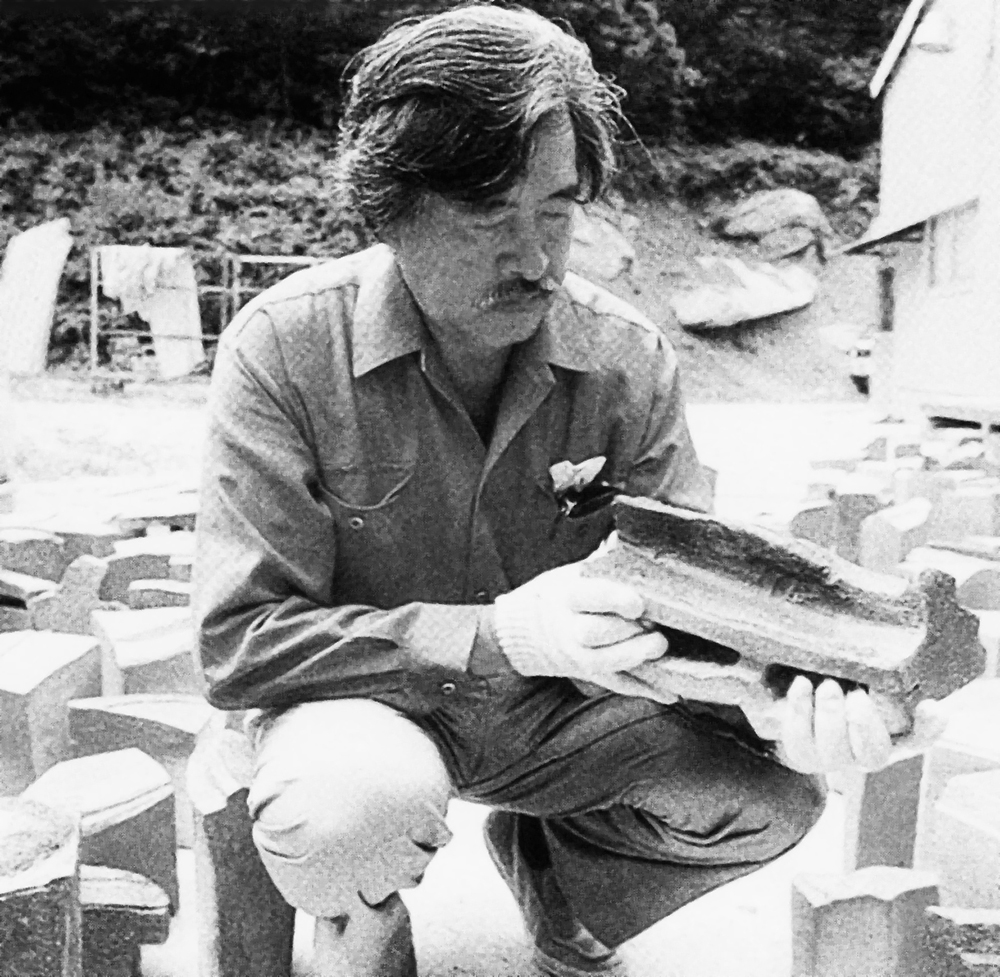
NISHIZAWA Luis
NISHIZAWA Luis
Mural Artist
Born in Zacatecas, Mexico in 1918. Became Professor at National Institute of Fine Arts, Mexico in 1955. A Mexican international mural painter ranking with Siqueiros and Tamayo. Produced a mural art "Fugetsu-ennen" in Japan. Passed away in 2014.Location : Front entrance concourse, Keisei Electric Railway Keisei Ueno Station

Artist's Comments
(Q: How do you think Keisei Ueno station as an installation place?)
Around Ueno station, there are museums, cultural halls, a zoo, a park and other facilities, and there are many children and young people. I am very interested in the station which those people use.
(Q: As a subject of this work, children’s vital power was adopted, and what intention did you have?)
I had the idea to draw a children’s world as a theme from the beginning. In Mexico, mural art is traditionally regarded as a means to nurture people. In medieval Europe, stained glass and murals played a role to teach illiterates by showing. So did in Egypt also. Since mural art originally has a social role, murals were always adopted in the buildings in China, Persia, Iran, Egypt, Maya Aztec from such a meaning. They were also for teaching the meaning of the building or the view of life, otherwise they were simply decorative pictures.
(Q: How should we interpret “Fugetsu-ennen”?)
The word itself is taken from Zeami. The carp streamer is a symbol of Children’s day, and it also means to fight bravely and strongly against difficulties, does not it? A child comes out of that carp and moves a windmill. Such a thing is repeated over many years and years. The windmill symbolizes atomic power (nuclear power), which implies the future energy.
(Q: Many people are surprised that a child is out from a carp’s mouth, are not they.)
To receive shock is a cause of stopping viewers’ feet, that is an intention of mine in a sense. When a question is raised “Why?”, creativity will work. Creativity renews human beings ….