Public Art Lectures and Educational Outreach
— Special Lecture at Aichi University of the Arts —
Our studio offers special lectures on public art at art universities across Japan.
In June 2026, a special lecture at Aichi University of the Arts featured four instructors from our studio and our parent company, NKB Inc. Approximately 25 students from the Ceramic Arts course in the Faculty of Fine Arts attended the lecture.
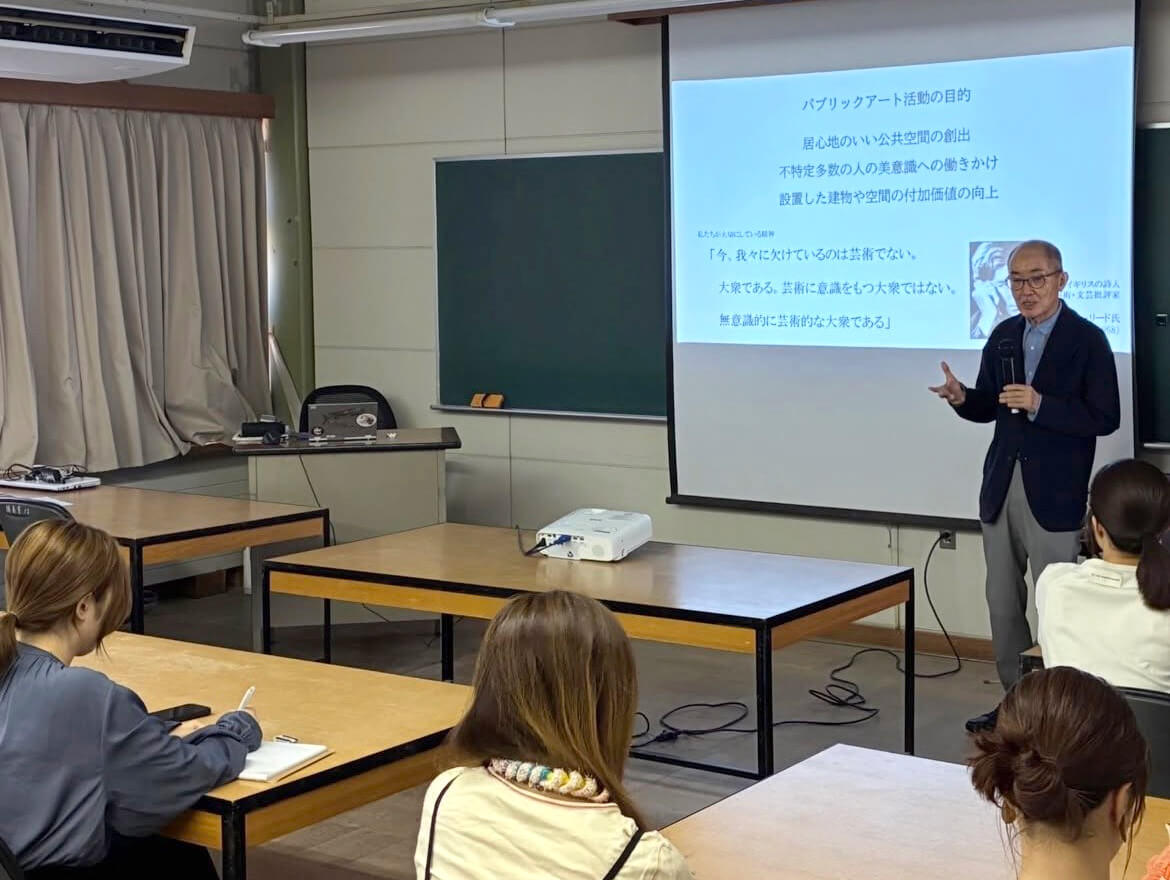
First, Studio Director Kei Nishikawa explained that unlike artworks created individually by artists, public art involves a diverse range of participants, including the original artist, studio craftsmen, the owners of the installation space, installation contractors, and funding organizations. He described the difference by saying, “If art is like a solo performance, public art is like a symphony orchestra.”
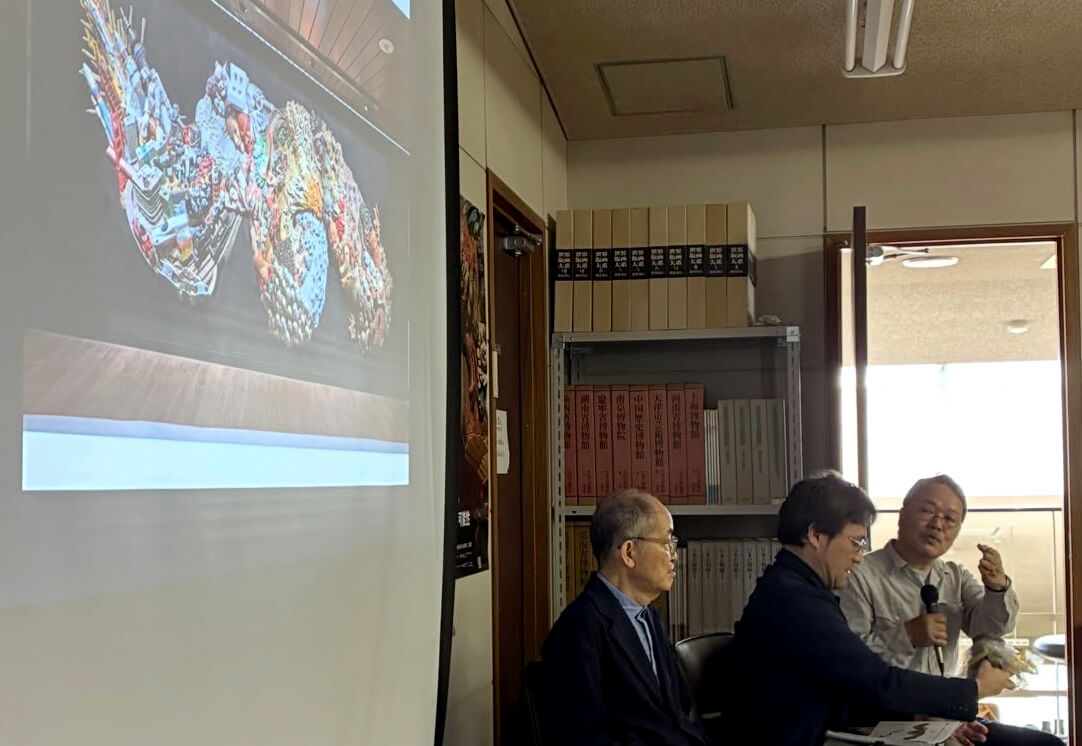
During the lecture, the studio provided an in-depth explanation of the production process behind the ceramic relief artwork “Procession Spin” (original artwork and supervision by Katsuhiro Otomo), which was installed in the underground shopping area of Ginza Station in December 2025.
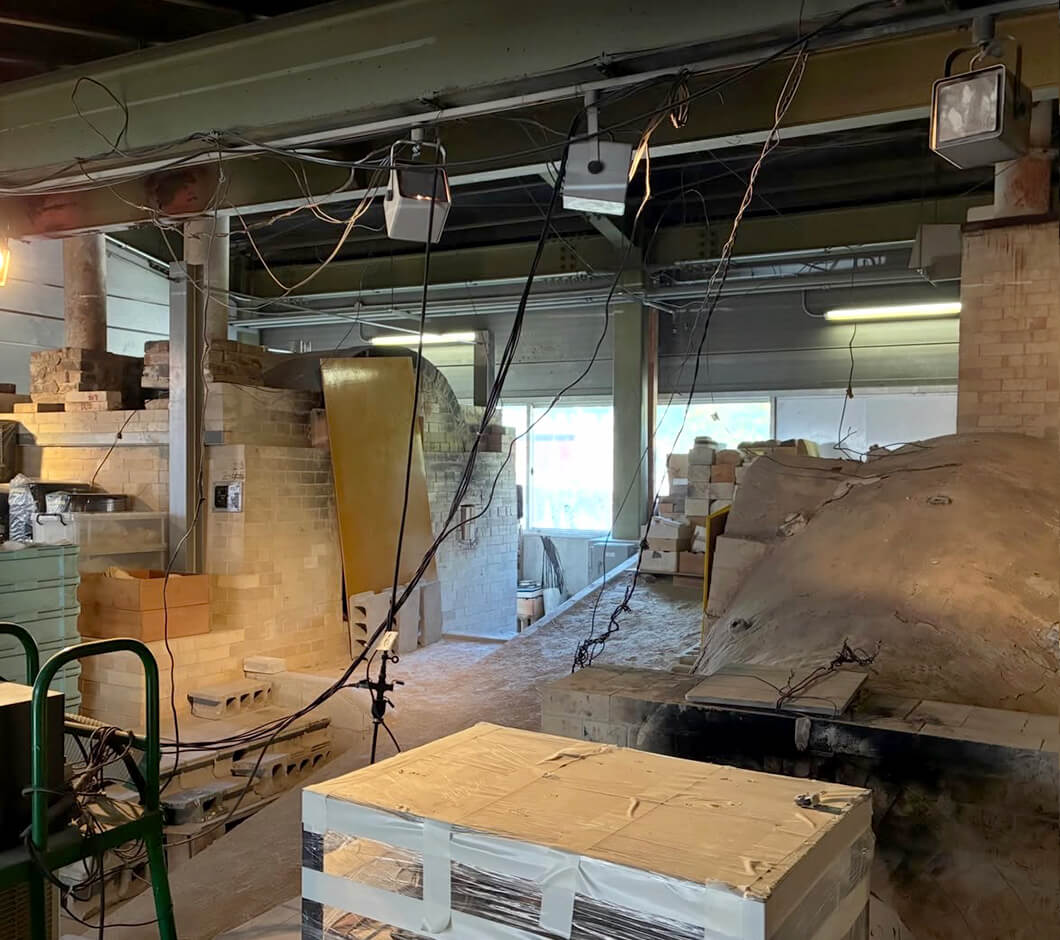
Sculptor Jiro Tanimoto explained the process using videos, beginning with tatara-uchi, a technique in which clay is repeatedly struck against the floor to remove air pockets. He then introduced the creation of small-scale models used as references for shaping, followed by the process of sculpting the clay spread across the floor based on those models. To help students understand the difference between clay used for large ceramic relief artworks and clay used for pottery, students were also given samples of the clay actually used at the studio to touch and examine.
Tanimoto explained that because an original artwork exists in two dimensions, the studio adds its own interpretation to transform it into a three-dimensional form—a process they refer to as “translation.” He also pointed out that the approach to shaping changes depending on whether the artwork is viewed at eye level or from below.
“When an artwork is viewed from below, we add more volume to the upper sections. It follows the same principle as Michelangelo’s David, where the head is made larger in proportion to the body,” Tanimoto explained.
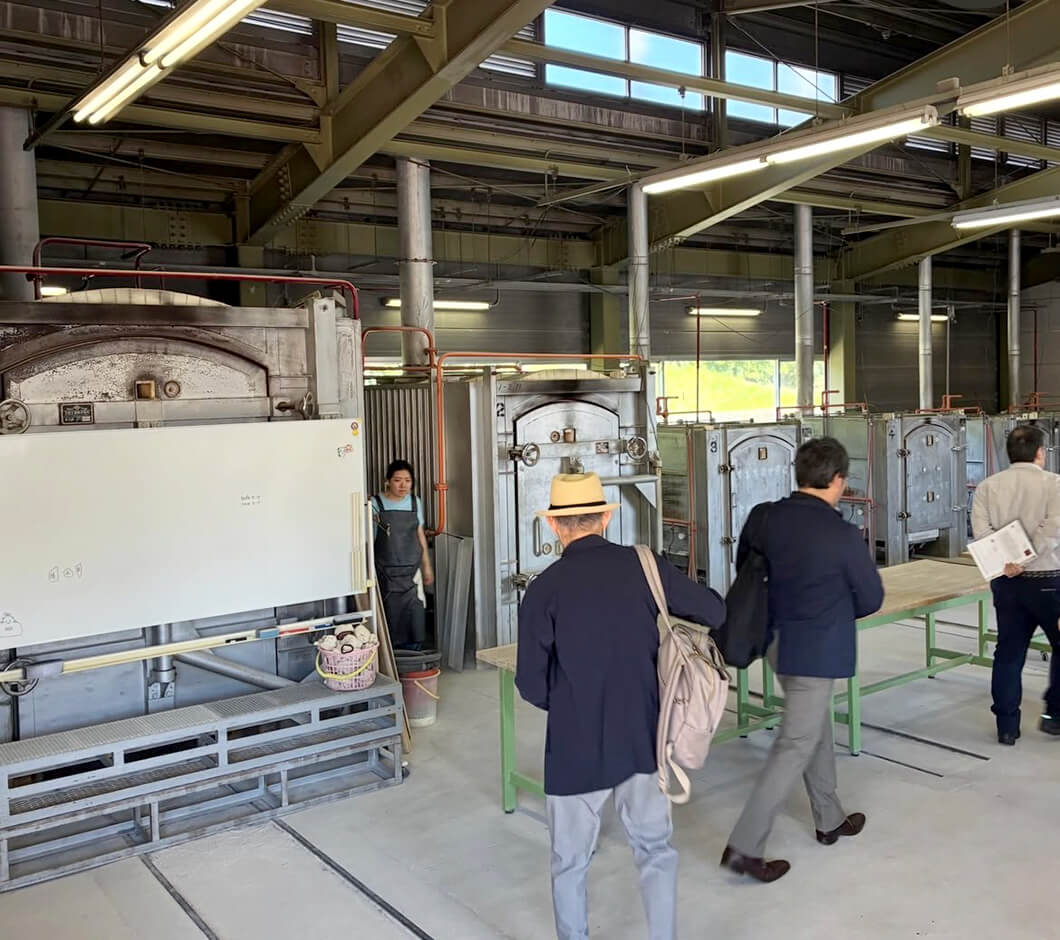
Large-scale works created at the studio are fired twice in a kiln, resulting in approximately 10% shrinkage. “If we do not calculate that from the beginning, the finished work may not fit the installation space,” he said, prompting students to nod in understanding.
Next, glaze specialist Atsuo Suzumura spoke about the glazing process. Even with the same glaze, the final color changes depending on whether it is applied thinly or thickly. The color can also vary depending on whether a piece is fired in the center of the kiln or near the edge.
“Even with the same color, the impression of a work changes greatly depending on whether the surface is matte or has a textured, rough appearance. It is not enough to simply achieve the desired color,” Suzumura explained. He also shared that there have been occasions when he was not satisfied with the result and repeated the glazing process.
For Procession Spin, Otomo requested that the sections depicting Jomon pottery have colors that appeared aged by the passage of time. After careful consideration, Suzumura created a glaze using soil from a field to achieve an appropriately weathered appearance.
The final session of the lecture was led by Hiroshi Terada, Executive Officer of NKB Inc., the parent company of our studio. He spoke about two key topics: (1) the importance of coordination in bringing together the diverse parties involved in public art projects, and (2) the importance of connecting art with business.
Regarding the latter, Terada explained that producing public art requires substantial financial resources. Support may need to be sought from foundations, or sponsorship contributions may need to be gathered from many companies. In such cases, it is essential to clearly communicate the significance and value of installing public art to potential supporters.
“There is a perception that discussing money in relation to art is taboo. However, the perspective of how we connect art with business is also important for the advancement of art and culture,” said Terada.
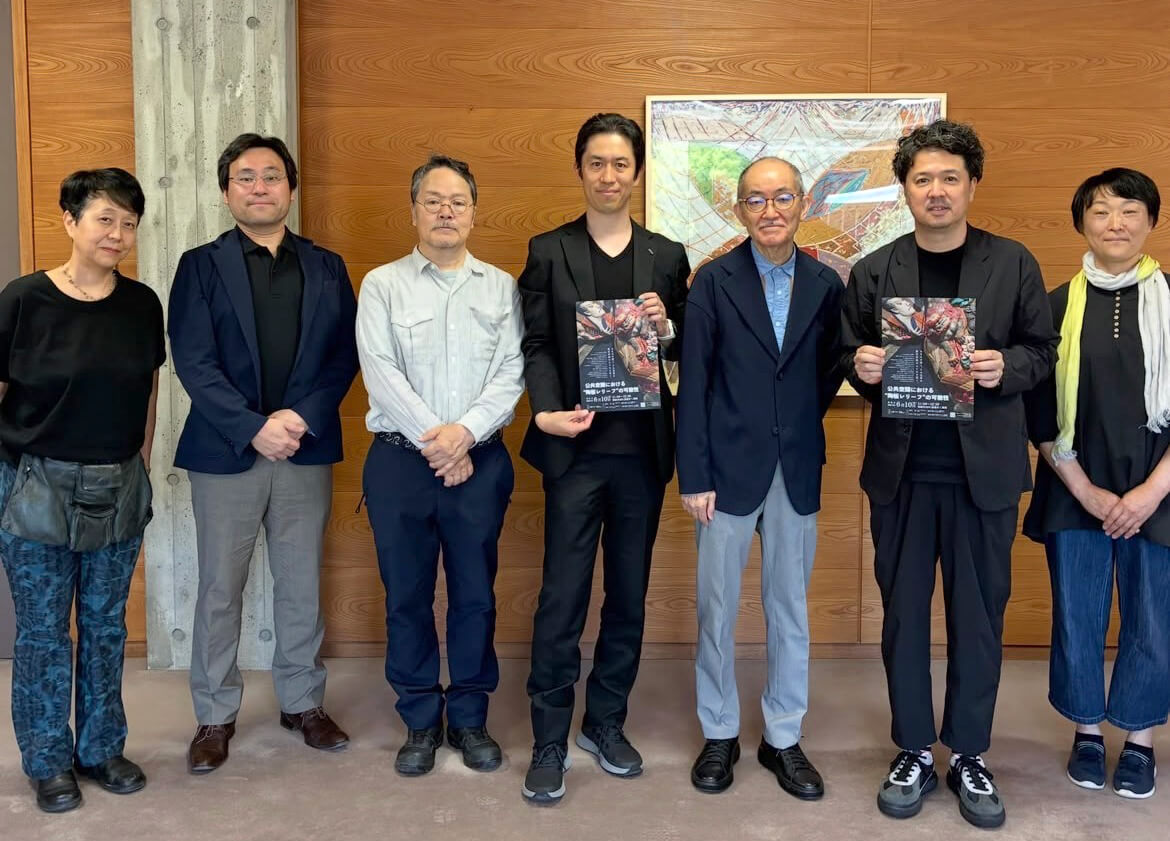
After the lecture, the instructors met with President Munetoshi Shirakawa for a discussion. Reflecting on the response to the lecture, the team feels that it provided students with fresh inspiration—some students even approached them afterward, saying, “I would like to work at your studio.”
Our studio also offers outreach lectures and educational programs led by craftsmen with advanced specialized knowledge and expertise. If you are interested, please feel free to contact us.
Contact us here